
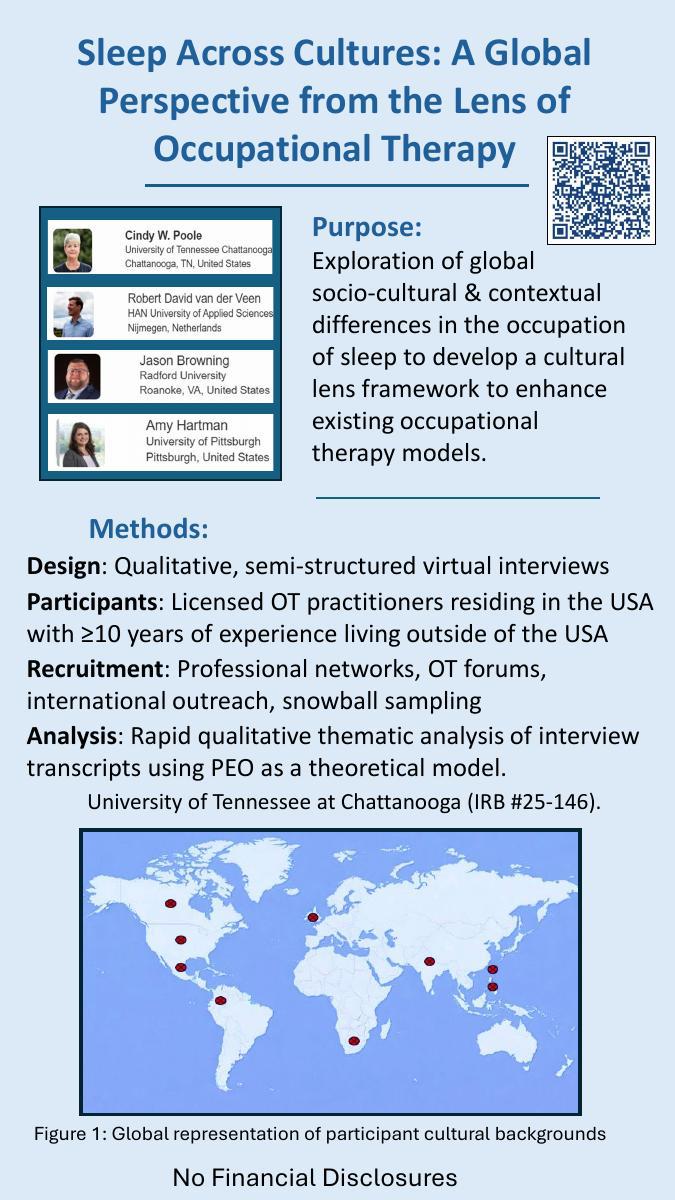
Introduction / Rationale: Insufficient sleep is a global public health issue, yet the understanding of sleep as an occupation has been shaped primarily by a Eurocentric, often Calvinistic perspective. This narrow viewpoint overlooks the cultural, social, and spiritual dimensions of sleep. Research indicates that sleep is valued differently across cultures, with varying levels of social, religious, and ceremonial importance. Through an international collaboration of sleep-focused occupational therapists, we seek to explore these cultural complexities, building a culturally responsive sleep framework.
Objectives: We aim to explore global socio-cultural differences in the occupation of sleep and develop a cultural lens framework to enhance existing occupational therapy models (e.g., Sleep Health Framework, PEO model).
Methods / Approach: Using semi-structured interviews with occupational therapists across the globe, we will extract themes of cultural values related to sleep. Interview questions examine the contexts of sleep as an occupation (e.g., environment, social context, personal factors, & views on the meaning, purpose & value of sleep). Rapid qualitative thematic analysis will be used to analyze the data using a socioecological framework.
Results / Implications: Recruitment is ongoing. We hypothesize that the meanings and structures of sleep are culturally influenced. Once thematic saturation is reached, interviews will be analyzed and findings shared. The results will provide a foundation for a culturally sensitive approach to sleep in occupational therapy.
Conclusion / Significance: Occupational therapists need a culturally sensitive understanding of sleep preparation and performance for client-centered care. This study will develop a culturally responsive sleep framework, highlighting sleep’s transformative impact on daily occupational performance.