
Introduction/Rationale (69): Global citizenship is essential for the profession’s growth and impact on individual, community, and population well-being. The versatility of the Kawa Model facilitates an innovative conceptualization of knowledge through visual storytelling and social perspectives, using an anti-oppressive approach to cultural context and occupational justice. This framework allows occupational therapy students the opportunity to align with the needs and conditions of their clients and communities by utilizing narrative-driven cultural context.
Objective (24): To examine the collaboration of storytelling and visual narrative to advance students’ understanding of a population-based occupational profile across diverse cultural and geographical contexts.
Methods/Approach (59): Occupational therapy students engaged in an innovative learning approach to occupational profiles by applying the Kawa Model Framework to understand populations and communities across Pacific Asia, including Hawaii, Tonga, Fiji, Aotearoa, Tahiti, and Samoa. Rather than assessing an individual client, students expanded the use of the Kawa Model to a population approach, gathering narrative-driven knowledge to support cultural context.
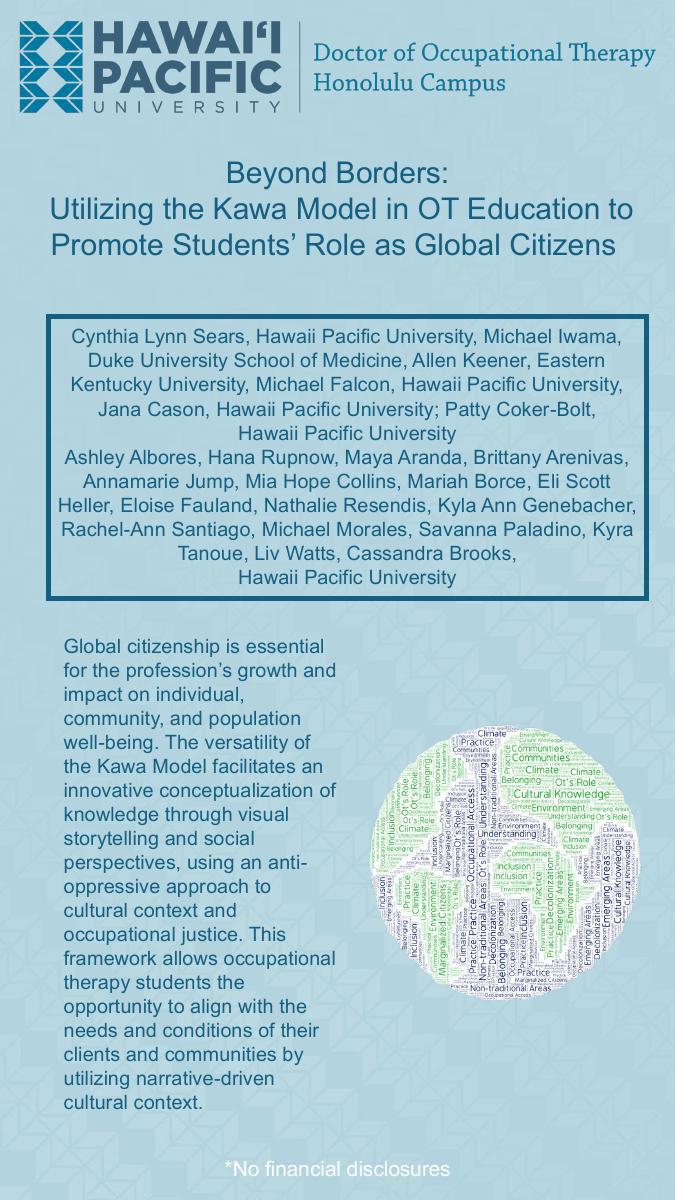
Results/Practice Implications (63): Students created population-level case studies using Kawa Model maps to support cultural storytelling and interactive presentations. They were inspired to rethink how to integrate cultural knowledge into their practice. They discovered an expanded understanding of OT’s role in supporting emerging and non-traditional practice areas, including climate and environmental needs, decolonization, and increased occupational access, belonging, and inclusion for marginalized citizens within their communities.
Conclusion / Significance to the Occupational Therapy Profession (26): Innovative approaches to OT education support the development of global citizens who think inclusively and act locally to support the health and well-being of international communities.