
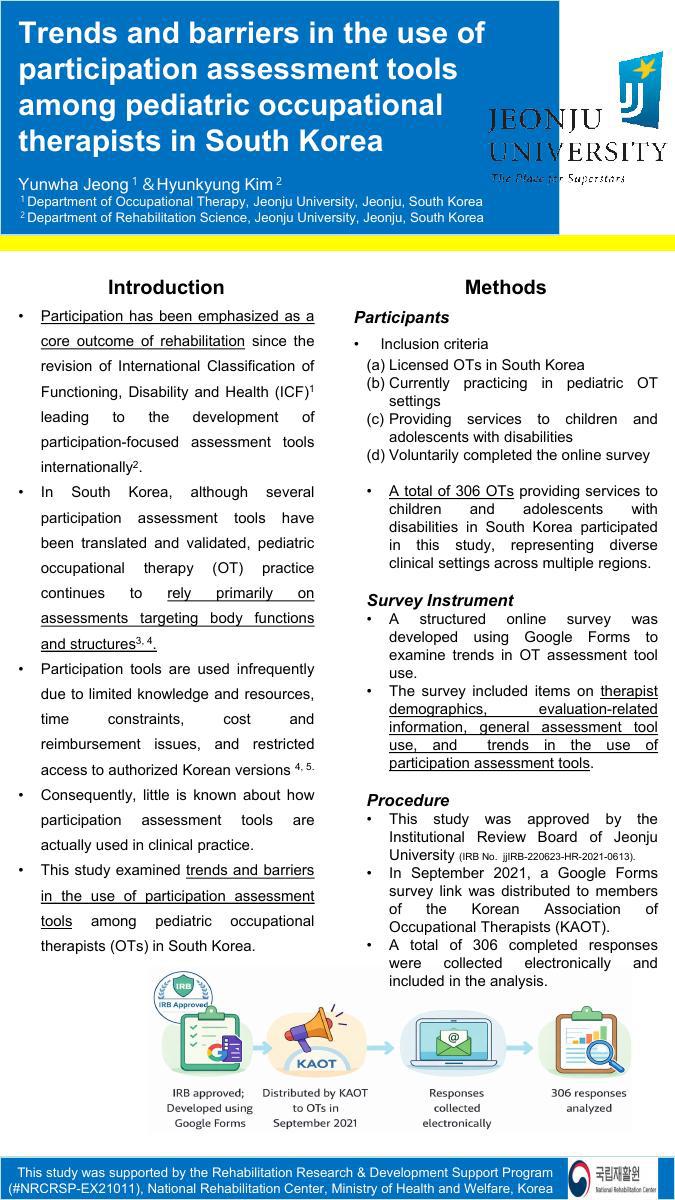
Introduction: Participation assessment is essential in pediatric occupational therapy (OT) to support children’s engagement in meaningful activities, yet its use remains limited in South Korea.
Objectives: This study examined trends in OT assessment tool usage among pediatric occupational therapists, focusing on participation assessments and identifying barriers to implementation.
Methods: A survey of 306 pediatric occupational therapists covered demographics, evaluation-related information, general OT evaluation trends, and participation assessment tool usage. Data were analyzed using SPSS ver.25.
Results: Most therapists had 2-5 years of experience (30.4%) and worked in private developmental centers (32.4%) and rehabilitation hospitals (17.6%). Developmental delay (84%) was the most assessed condition, and 3-7 years was the most evaluated age group. Only 21.2% of therapists had used participation assessment tools, with the Canadian Occupational Performance Measure (COPM) being the most common. The COPM was preferred due to its ease of use, short administration time, and suitability for caregiver consultations. The barriers to participation assessment were lack of information and resources, cost constraints, time limitations, and insurance reimbursement issues. Participation assessments were most needed for children aged 8-10 years, particularly those with developmental delays and autism spectrum disorder.
Conclusion: Findings highlight the need for education, financial support, policy changes, and the developing standardized participation assessment tools to enhance participation assessments in pediatric occupational therapy.