
Introduction
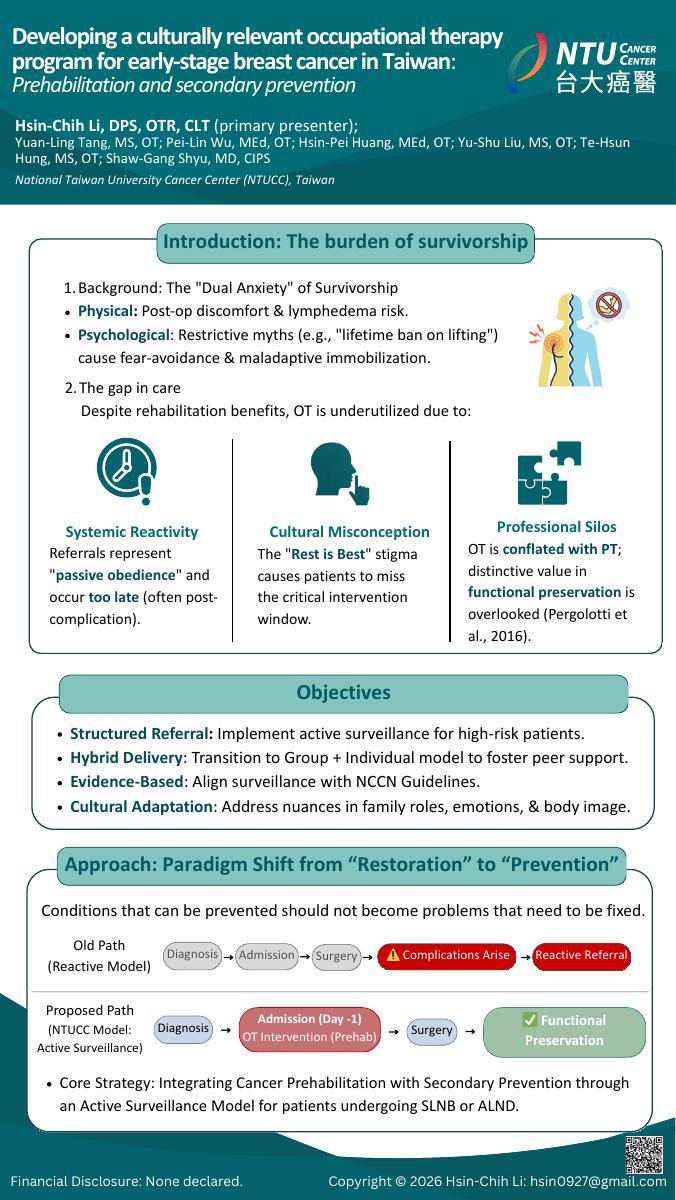
Despite advancements in cancer treatment, distressing symptoms continue to affect quality of life and occupational performance of individuals undergoing therapy. The team at the National Taiwan University Cancer Center has developed an occupational therapy (OT) program to enhance both quality of life and occupational performance for these individuals. This program incorporating culturally sensitive approaches to address the unique needs of patients, focusing on symptom management and functional recovery to help them regain independence and enhance daily functioning.
Objectives
- Describe OT’s role in prehabilitation and secondary prevention for individuals with early-stage breast cancer.
- Explore culturally responsive OT interventions addressing client concerns.
- Establish structured referral systems and interdisciplinary collaboration in oncology rehabilitation to promote best practice.
Approach
- Oncology Team Outreach: Promote OT awareness, foster collaboration, and increase referrals through interdisciplinary meetings and in-services.
- Referral System: Develop and implement a structured referral process for patients undergoing anti-cancer treatment.
- OT Care from Prehabilitation to Secondary Prevention: Conduct screenings and follow-ups to monitor functional changes, addressing key concerns among Taiwanese women, including body image, caregiving demands, and social stigma. Provide peer support, body image counseling, lymphedema and fatigue management, lifestyle modifications, and integrate traditional health beliefs into holistic care.
Practice Implications
Preliminary results show increased OT awareness, better interdisciplinary coordination, and improved patient-reported outcomes. Culturally tailored interventions have strengthened engagement and adherence, reinforcing OT’s role in early intervention.
Conclusion
Integrating prehabilitation, secondary prevention, and cultural considerations enhances OT’s impact on survivorship and long-term function, with ongoing research to refine best practice and collaboration.