
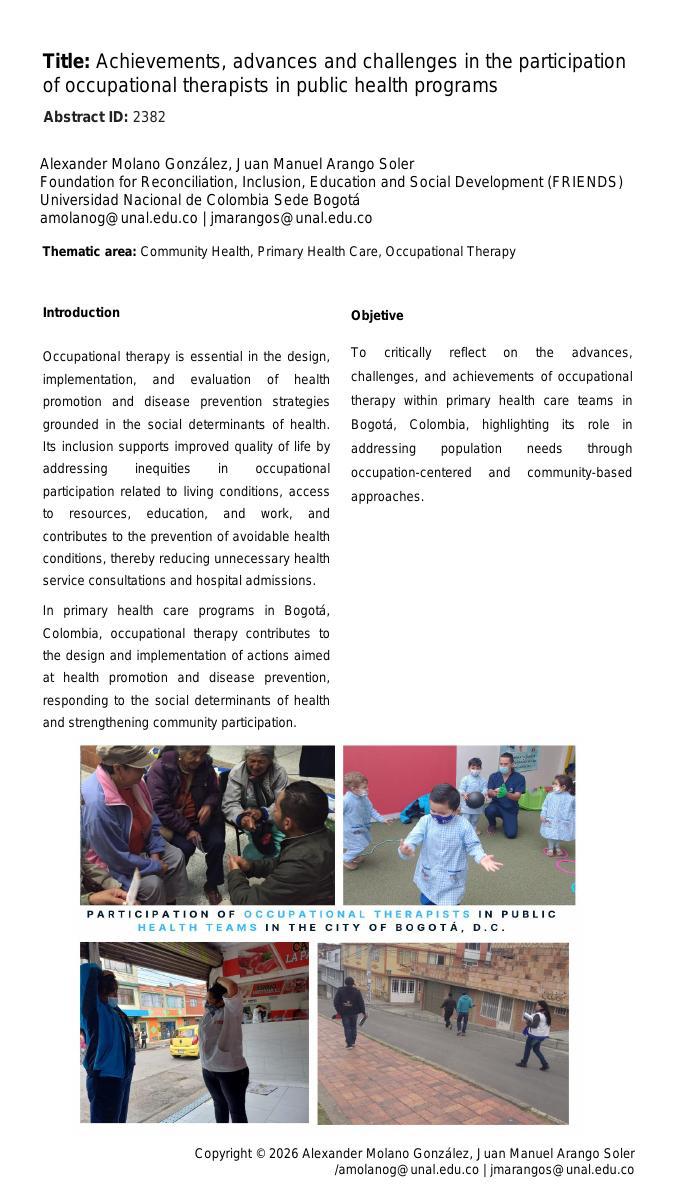
Introduction: Through information, education and communication strategies, the occupational therapist participates in interdisciplinary health teams, recognizing the socio-sanitary conditions of the communities to generate habits for collective care and well-being in Primary Health Care programs in the city of Bogota, Colombia.
Objectives: To analyze the achievements, progress and challenges of the participation of occupational therapists in public health programs in Bogota (Colombia).
Methods: A phenomenological approach was used, where a critical reflection is made of the lived experience of the main author in terms of his participation in public health programs, which is put into dialogue with the knowledge of an Occupational Therapy academic expert in public health; these reflections are contrasted with theoretical references of the profession and specialized literature.
Results: The academic training of professionals in occupational therapy and the expertise in the different fields of action facilitate the generation of decisive actions in home, school, work, institutional and community areas. Furthermore, interdisciplinary work with professionals in Psychology, Medicine, Nursing, Nutrition, Dentistry and Environmental Sciences strengthens their skills in the field of public health. These experiences demonstrate the positive impact of occupational therapists in promoting care, preventing health risks and intervening throughout all stages of the life cycle.
Comclusion: The participation of the occupational therapist in public health programs is essential for the design, implementation and evaluation of health promotion and disease prevention strategies regarding social determinants of health, which benefit people's quality of life and reduce consultations and admissions to health centers.