
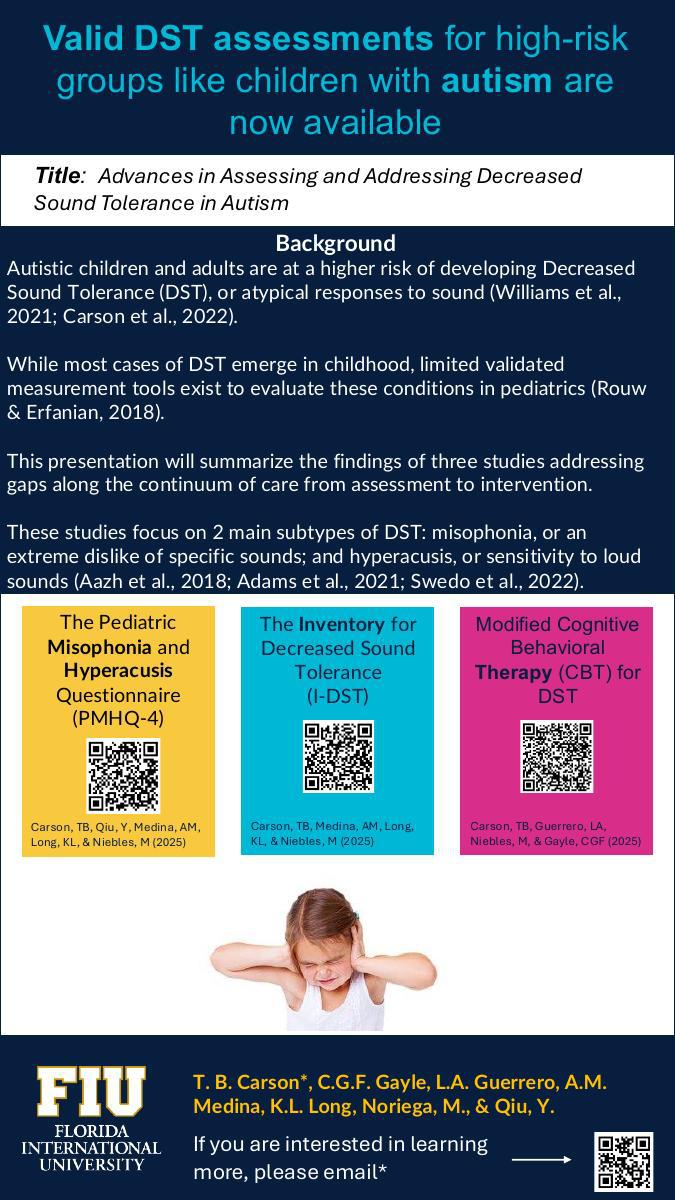
Background: Children with autism spectrum disorders (ASD) have a higher incidence of Decreased Sound Tolerance (DST) conditions than other children. DST conditions include misophonia and hyperacusis and often emerge in childhood. Early identification and treatment are important. However, historically, valid pediatric assessment tools and evidence-based interventions have been lacking.
Objective: This presentation will synthesize findings across four recent studies including (1) the development and validation of the Pediatric Misophonia and Hyperacusis Questionnaire (PMHQ-4), a screening tool, (2) the development of the I-DST, a treatment planning tool, as well as (3) a clinical case report and (4) a clinical pilot study illustrating the use of a modified cognitive behavioral therapy approach to addressing DST.
Practice Implications: The PMHQ-4 represents the first pediatric screening tool capable of identifying and differentiating two key DST conditions – hyperacusis and misophonia. The I-DST is a useful companion to the PMHQ-4 for a further characterization of DST needed for intervention planning. A modified cognitive behavioral therapy intervention protocol demonstrates promising outcomes for four pediatric cases and should be considered for future research and clinical applications.
Contribution to the occupational therapy profession: The clinical tools and intervention approaches covered in this presentation represent a major step towards filling the gap in evidence-based practice for identifying and addressing DST. DST is a commonly co-occurring condition among children with autism. As occupational therapists, our role in identifying and addressing this sensory-based problem is important and it is critical that therapists are equipped with evidence-based tools and strategies.