
Introduction:
The assessment of parental sexual education practices and adolescent sexual behaviours is crucial for understanding sexuality education within different cultural contexts.
Objectives:
This study aimed to translate and validate the Revised-Parent Sexual Education Inventory (R-PSEI) and Sexual Behaviour Scale (SBS) into the Malay language to ensure their cultural and linguistic suitability for Malaysian parents of adolescents with learning disabilities.
Methods:
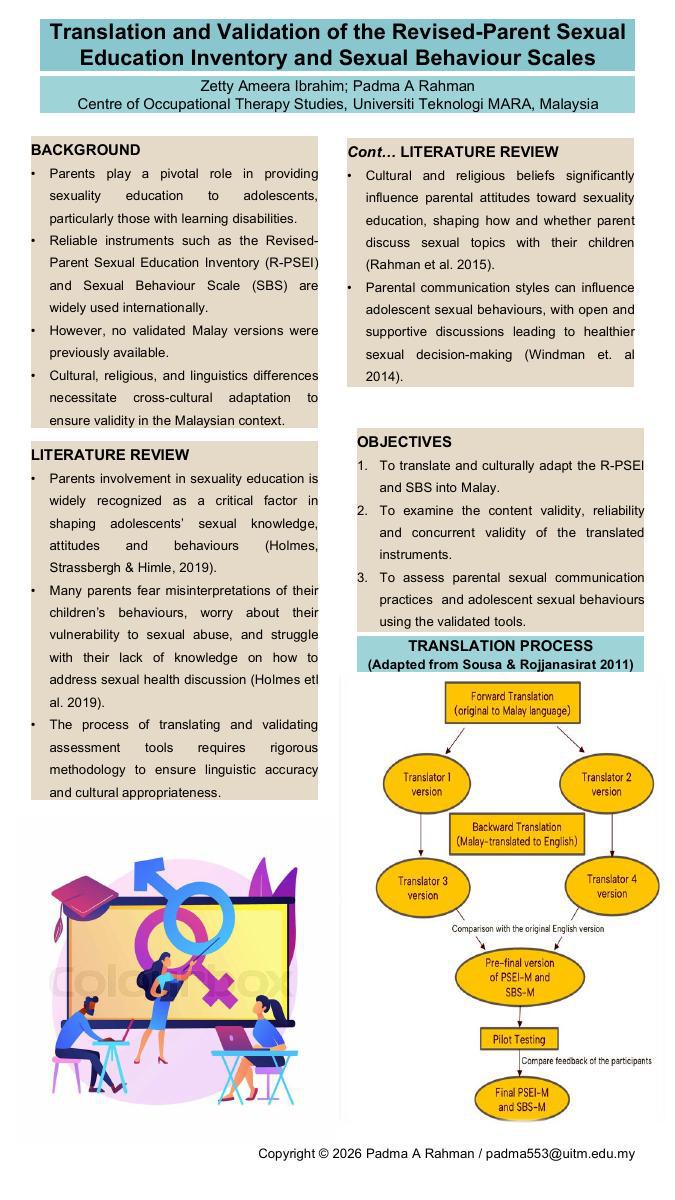
The study was conducted in two phases: (1) Translation and Validation, which involved forward and backward translation by bilingual experts, harmonization through expert review, pilot testing, and content validation by a panel of specialists, and (2) Cross-Sectional Survey, which assessed parental sexual education techniques and adolescent sexual behaviours using the translated instruments.
Results:
The content validity index (CVI) of both the PSEI-M and SBS-M demonstrated strong agreement among experts, with minor adjustments made to enhance clarity. Concurrent validity analysis showed high correlations between the original and translated versions, confirming the reliability of the instruments in measuring the intended constructs. Findings from the cross-sectional survey revealed that parental sexual communication strategies varied, with discussion-based approaches being the most commonly used, whereas visual and skills-based teaching methods were less frequent. Additionally, differences in adolescent sexual behaviours were observed based on the presence or absence of parental sexual communication.
Conclusion:
The validated PSEI-M and SBS-M provide reliable and culturally sensitive tools for assessing parental involvement in sexuality education and adolescent sexual behaviours. These instruments will aid researchers, educators, and healthcare professionals in developing targeted interventions and policies to support sexual education among adolescents with learning disabilities in Malaysia.