Introduction: Children with with autism spectrum disorder (ASD) are particularly vulnerable to changes in daily routines, making them more susceptible to anxiety and stress during disaster like COVID-19. Furthermore, the prolonged nature of the disaster extended the limitations on access to rehabilitation potentially causing ASD children to miss the critical period for early intervention.
Objectives: This study examined the effect of an online family-centered coaching program on the occupational performance and satisfaction of children with ASD, as well as the parenting efficacy of their caregivers in Korea.
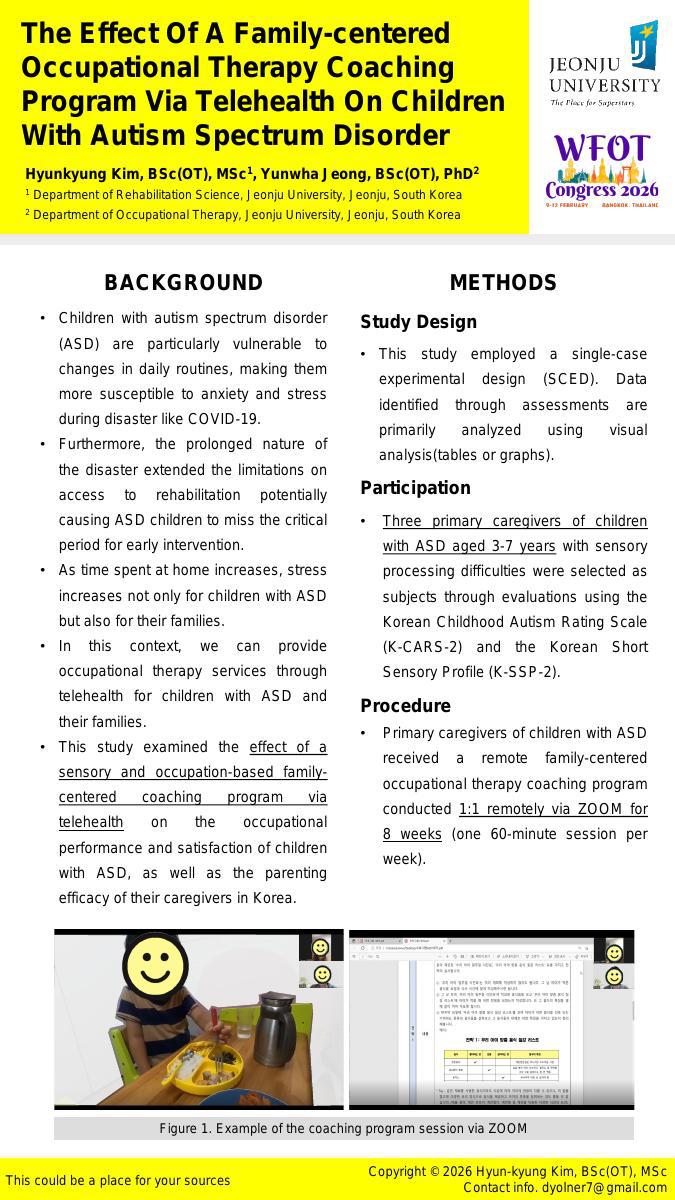
Methods: A single-case experimental design was used with three children with ASD aged 3-7 years with difficulty in sensory processing. Caregivers participated in an 8 weeks program (one 60-minute session per week) via Zoom. Changes in goal activities were evaluated using the Korean version of the Canadian Occupational Performance Measure (K-COPM) and Goal Attainment Scaling (GAS), while parenting efficacy was assessed with the Korean version of the Parenting Efficacy Scale (K-PET).
Results: Children with ASD selected goals targeting challenges in participation due to sensory processing difficulties, such as eating, sleeping, and toilet use. After the program, they showed improvements not only in their goal activities but also in other daily living activities, which persisted one month later. Although the caregivers displayed stability increased.
Conclusion: These findings confirm the positive impacts of telehealth-based occupational therapy for the caregivers of children with ASD in Korea. The children demonstrated enhanced participation in daily activities, and caregivers gained a better understanding of their children’s sensory characteristics. This study provides clinical evidence to inform the development of telehealth occupational therapy programs and related policies.
