
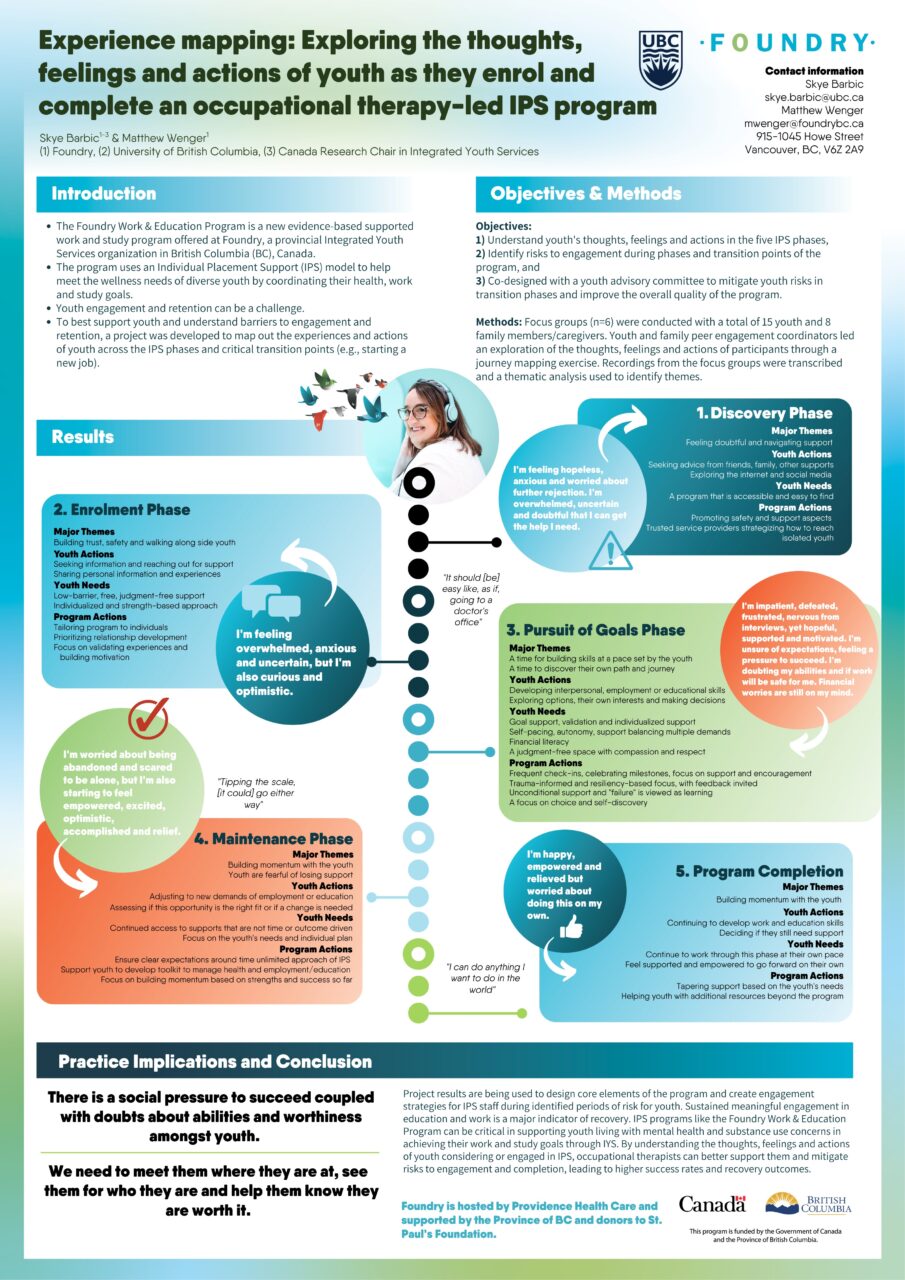
Introduction / Rationale: Foundry Works and Education is an evidence-based supported work and study program within Foundry, a provincial youth service in British Columbia (BC), Canada. Using the Individual Placement Support (IPS) model, it coordinates youth health, work, and study goals. Engaging and retaining youth in the program can be challenging. This project maps youth experiences through program phases to inform strategies for improving engagement and retention, especially during key transitions, like starting a job.
Objectives:
- Understand youth experiences across the IPS phases (contemplation, engagement, active search, post-placement, and completion).
- Identify risks to engagement at each phase.
- Co-design solutions with a youth advisory committee to address risks and improve the program.
Methods / Approach:
Focus groups were held with 15 youth and 8 family members/caregivers, guided by peer coordinators. A journey mapping exercise explored youth experiences. Data were analyzed thematically to identify key themes, considering equity, diversity, and inclusion.
Results / Practice Implications: Identifying barriers to engagement helps IPS programs improve retention and success. By addressing risks during key transitions, Foundry Works and Education can better support youth in achieving work and study goals.
Conclusion / Contribution to the Occupational Therapy Profession: The findings will inform the scaling of Foundry Works and Education, BC’s first provincial youth IPS program, emphasizing the role of occupational therapy in supporting youth with mental health and substance use challenges to achieve meaningful work and education.