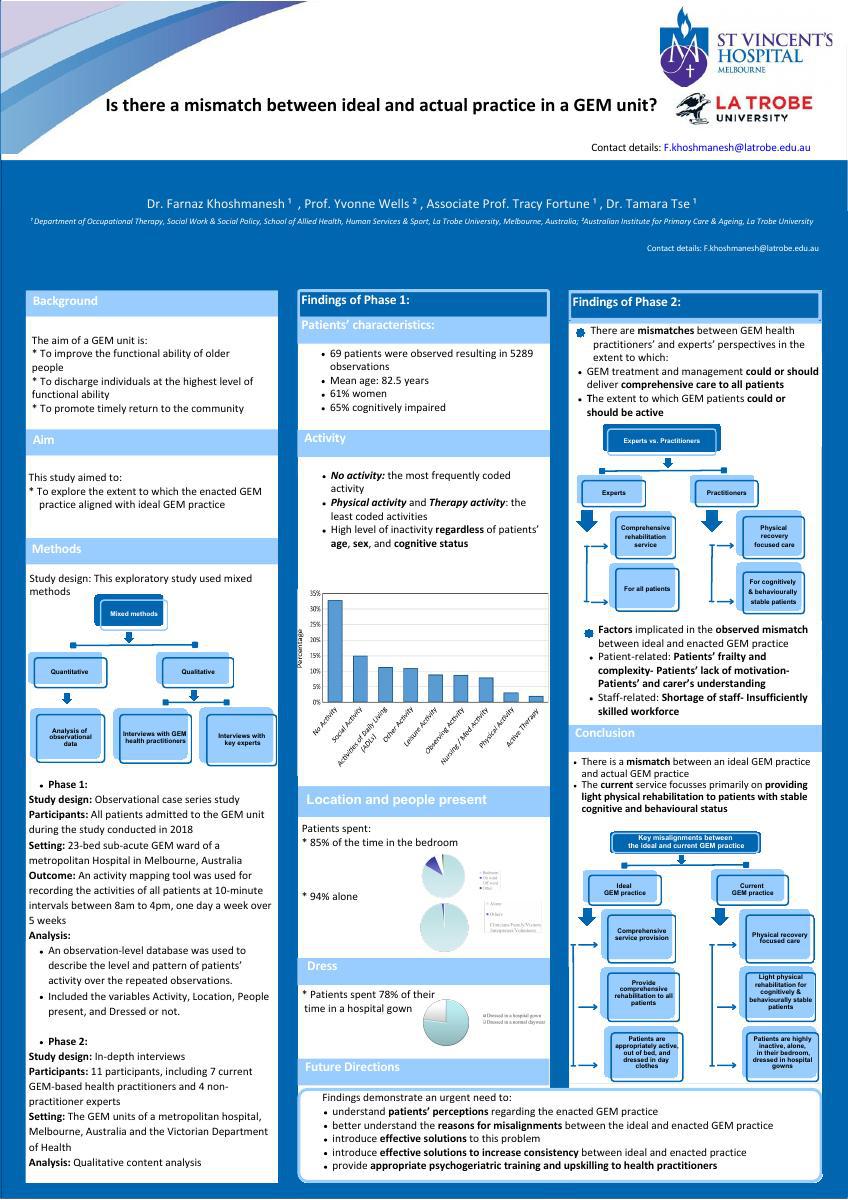
Introduction / Rationale: Geriatric Evaluation and Management (GEM) is a model of inpatient care that aims to maintain or restore function, minimise risks associated with impaired function, manage common geriatric conditions, and optimise community living arrangements. Yet, recent studies suggest that GEM patients spend most of their time inactive, alone, and in hospital gowns. To the best of our knowledge, no previous studies have explored the extent to which current practice in GEM units aligns with care recommended in clinical practice guidelines. Objectives: This two-phase study set out to understand the extent to which enacted practice aligns with ideal GEM practice.
Methods: In phase 1, a literature review and semi-structured interviews conducted with GEM experts enabled an understanding of ideal GEM practice. In phase 2, interviews with health professionals practicing in one Victorian GEM were also conducted to better understand the enacted practice. Interviews were transcribed and qualitative content analysis was utilised.
Results: It is evident that there is a mismatch between literature-based descriptions of an ideal GEM unit, GEM experts’ perspectives, and enacted practice described by GEM health professionals. For example, the notion of appropriate and less appropriate GEM patients was evident in health professionals’ accounts. Participant descriptions revealed a range of challenges to achieving an ‘ideal’ service.
Conclusion/ Contribution to the occupational therapy profession: These findings highlight the importance of investigating the possible underlying reasons for the mismatch and an urgent need to introduce effective solutions to this problem. These findings demonstrate an urgent need for recommendations that can increase the consistency between ideal and enacted practice and can ultimately improve the quality of care delivered in GEM units.
