
Introduction/Rationale
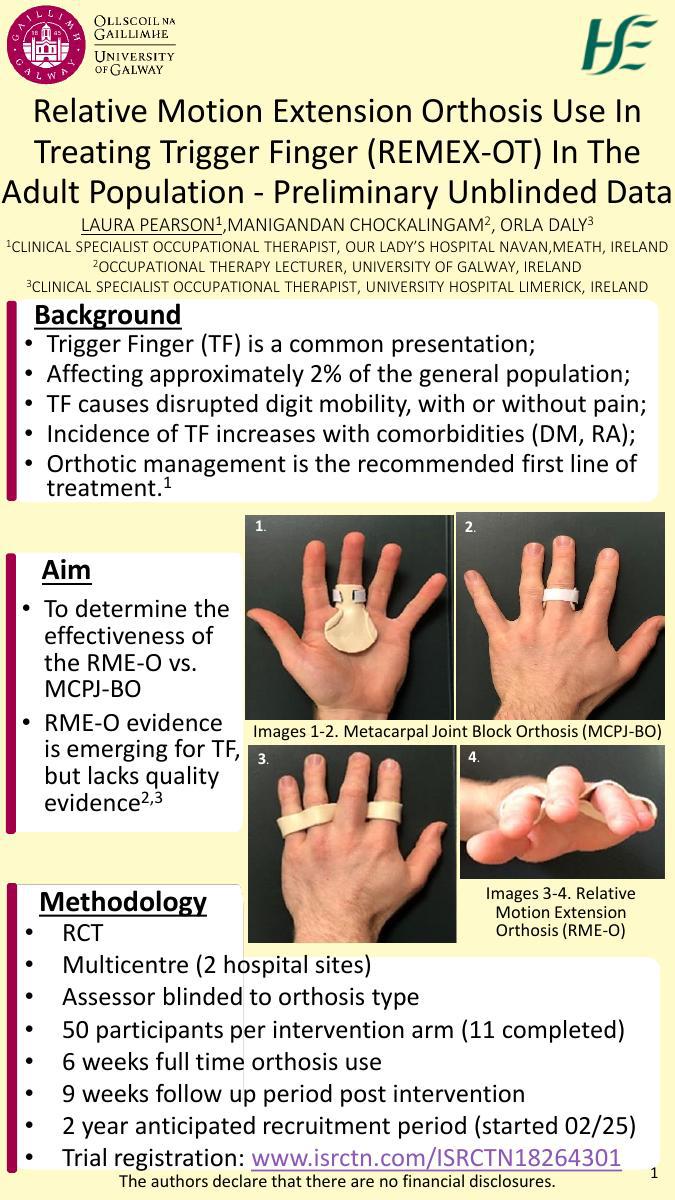
Trigger Finger (TF) is a common condition characterised by painful, restricted digit movement due to thickening of the flexor tendon and/or its sheath, particularly at the A1 pulley. Conservative management typically includes orthotic intervention, with the metacarpophalangeal joint blocking orthosis (MCPJ-BO) widely prescribed. However, emerging evidence suggests the relative motion extension orthosis (RME-O) may offer a more functional alternative, potentially enhancing both comfort and hand use. Direct comparative evidence for these orthoses is limited, warranting further robust research.
Methods/Approach
This ongoing two-arm, parallel-group, assessor-blinded, multi-centre randomised controlled trial (RCT) is being conducted in two publicly funded hospitals in Ireland. Adults presenting with grade 2-5 TF affecting the index, middle, ring, or little finger are eligible for inclusion. Following informed consent, participants are randomly allocated to either the MCPJ-BO or RME-O group. Outcomes are assessed at 3, 6, 9, 12, and 16 weeks post-randomisation, with primary outcomes focusing on pain relief and functional improvement. Secondary outcomes address patient satisfaction and adherence to orthotic use. Trial feasibility and recruitment progress are formally evaluated after five months.
Results/Practice Implications
Preliminary data from the first five months, representing approximately 30% of the target sample, will be presented. Data will focus on overall orthotic effectiveness in TF management, without unblinding individual group allocations. These findings will inform clinicians’ decision-making when prescribing orthoses, balancing clinical effectiveness, functional outcomes, and patient adherence.
Conclusion and Significance to Occupational Therapy
This trial contributes valuable evidence to guide occupational therapists in evidence-based orthotic prescriptions, enhancing clinical care and patient-centred outcomes in hand therapy practice.