
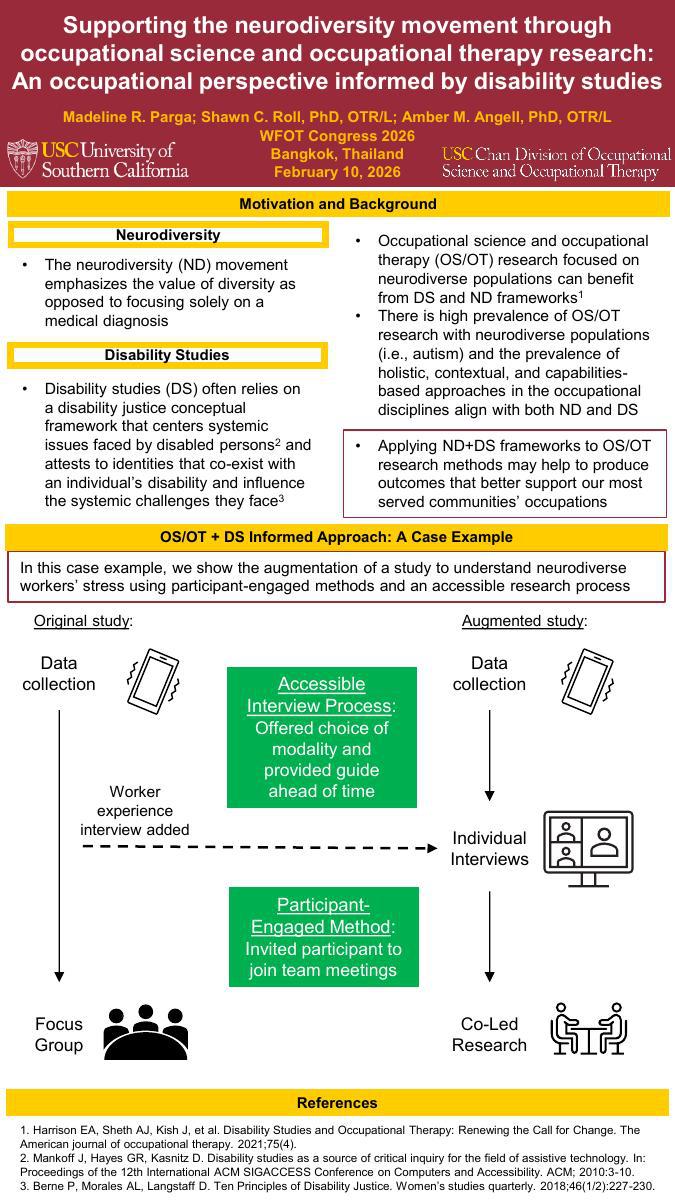
Introduction: The neurodiversity movement, which seeks to celebrate differences in neurocognitive functioning while increasing inclusion and acceptance across social structures, is a potential area for furthering disability-centered perspectives in occupational science and occupational therapy (OS/OT) by enabling researchers and professionals to engage with a social model of disability.
Objectives: Discuss opportunities for occupational therapists and scientists to expand their application of the social model of disability through interdisciplinary engagement with disability studies (DS). DS principles prominently call for the centering of disabled perspectives and the critical evaluation of how disability is being framed and discussed, demonstrating great potential for contribution to occupational research and practice that implicates neurodivergent persons.
Approach: The presentation will explore a synthesis of literature from the occupational disciplines and DS field to showcase current considerations of neurodiversity in occupational research and explore opportunities for growth. Key opportunities identified will be applied to a case example of neurodivergent workers to enhance applicability of presentation takeaways.
Practice Implications: OS/OT research seeks to understand human occupation and strengthen clinical practice. Understanding neurodiversity is important for OS/OT to continue to support differences and promote meaningful engagement while considering complex social factors. Interdisciplinary engagement with DS principles can continue to shape both disciplines’ current understanding of what it means to promote individuals’ ability to engage in healthy occupations.
Conclusion: As leaders in fields engaging with neurodivergent populations, occupational therapists and scientists can continue to shape how the neurodiversity movement has real world impact on research and practice, leading to the fully realized potential of an occupational perspective.