Introduction / Rationale:
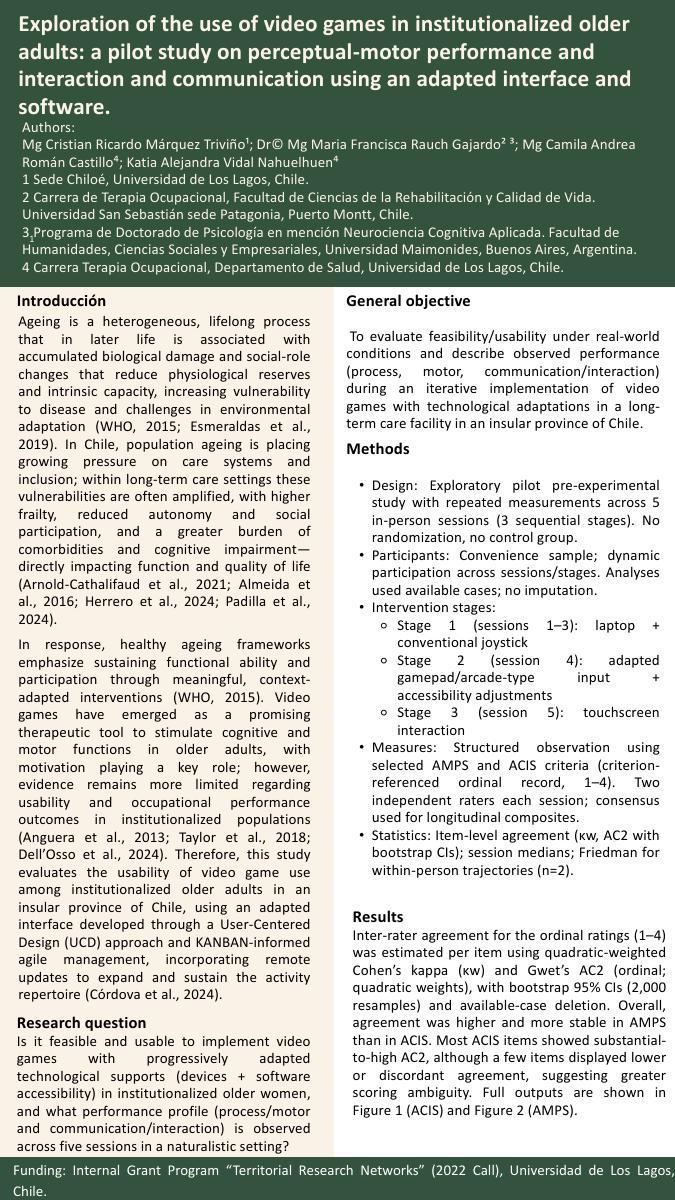
Video games have shown potential as tools to enhance the participation of older adults in leisure activities, impacting their well-being. However, factors such as cognitive decline, motor abilities, and environmental accessibility influence their effectiveness in institutionalized individuals.
Objectives:
This study explores the therapeutic use of video games to improve cognitive, motor, emotional, and social skills in institutionalized older adults, focusing on adapting the technology to meet individual needs.
Methods / Approach:
The research followed a non-experimental, exploratory design with older adults aged 60-80 years. The study consisted of three stages: initial assessment with conventional video games, testing an adapted gamepad, and evaluation with a touchscreen computer. Motor, process, and communication skills were assessed using the AMPS and ACIS tools. Data analysis included descriptive statistics and the Mann-Whitney U test to compare performance across stages.
Results / Practice Implications:
The results indicated improvements in interaction, communication, and cognitive processing despite cognitive decline. Adaptations to the game interface and devices, such as touchscreen technology, enhanced user motivation and engagement. Socioeconomic and cultural factors were important in shaping the outcomes, highlighting the need for individualized interventions.
Conclusion / Contribution to the occupational therapy profession:
This study demonstrates the potential of adapted video games in improving the well-being of institutionalized older adults. It underscores the importance of personalized, context-sensitive interventions, suggesting that video games can play a significant role in occupational therapy to improve quality of life.