
Introduction / Rationale:
Parkinson’s disease (PD) leads to impairments in dexterity, grip strength, and upper extremity function, impacting daily activities and quality of life. While traditional rehabilitation focuses on structured exercises, adaptive rock climbing offers a dynamic, occupation-based intervention that integrates problem-solving, proprioception, and controlled movement to enhance upper limb function.
Objectives:
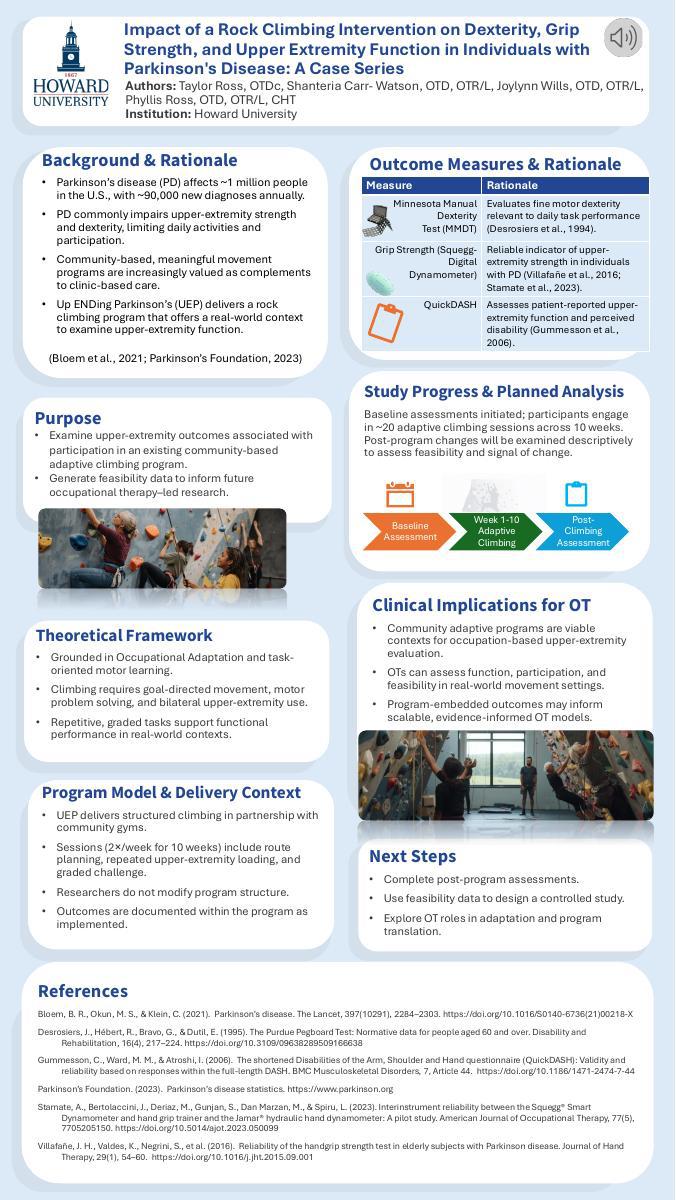
This case series examines the effects of a 10-week adaptive rock climbing intervention on manual dexterity, grip strength, and upper extremity function in individuals with mild to moderate PD.
Methods / Approach:
Three participants engaged in a structured indoor climbing program. Pre/post assessments included:
- Manual dexterity: Minnesota Manual Dexterity Test (MMDT)
- Grip strength: Hand Dynamometer
- Upper extremity function: QuickDASH questionnaire
Results / Practice Implications:
Preliminary findings indicate improvements in dexterity, grip strength, and functional limb use, suggesting that repetitive climbing movements and problem-solving enhance fine motor control and endurance.
Conclusion / Contribution to OT:
This study contributes to evidence supporting occupation-based interventions in neurorehabilitation. Adaptive climbing may provide occupational therapists with an innovative, engaging strategy to improve upper extremity function and independence in individuals with PD.