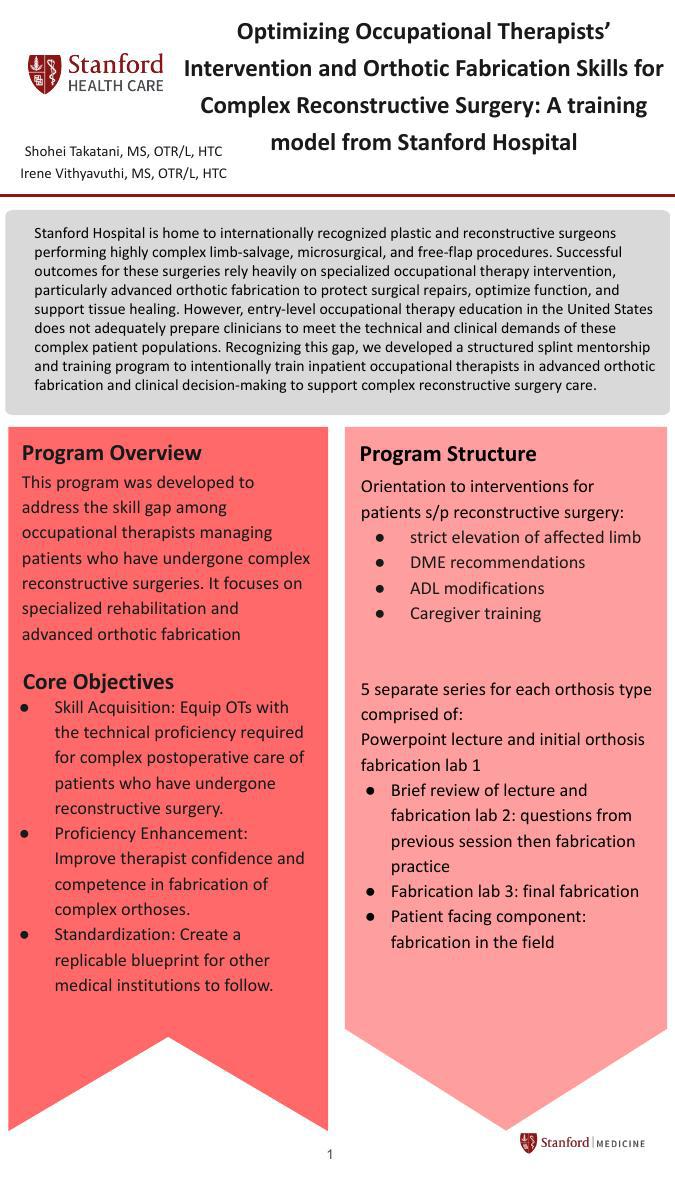
Introduction / Rationale: Effective treatment and orthotic fabrication are essential in the rehabilitation of patients undergoing complex reconstructive surgeries. However, many occupational therapists (OTs) encounter challenges in developing the specialized skills required for these procedures. To bridge this gap, we designed a training program to equip OTs with the skills to effectively manage the specialized needs of this patient population. Objectives: Outline the design, implementation, and outcomes of Stanford Hospital’s specialized training program, highlighting its impact on OT proficiency in the care of patients with complex reconstructive surgery. Methods / Approach: Curriculum Development: A comprehensive curriculum was formulated, covering adaptive strategies and modified techniques for performing daily activities and advanced orthotic fabrication techniques, and biomechanics. The curriculum integrates evidence-based practices and hands-on workshops. • Simulation-Based Training: Participants engage in simulation sessions using high-fidelity models to practice splint fabrication and application, allowing for skill refinement in a controlled environment. • Interdisciplinary Collaboration: The program fosters collaboration between OTs, surgeons, and other healthcare professionals to ensure a holistic understanding of surgical procedures and postoperative care requirements. • Mentorship and Continuous Feedback: Experienced clinicians provide mentorship, offering real-time feedback and guidance to participants throughout the training process. Results / Practice Implications: Post-training assessments indicate a significant improvement in participants’ confidence and competence in providing OT intervention and custom orthotic fabrication for complex reconstructive surgery. Conclusion / Contribution to the occupational therapy profession: Stanford Hospital’s specialized training program effectively bridges the skill gap for OTs treating patients after complex reconstructive surgery. The program’s approach enhances therapist proficiency and patient outcomes. This model can serve as a blueprint for other institutions aiming to elevate their OT training.
