
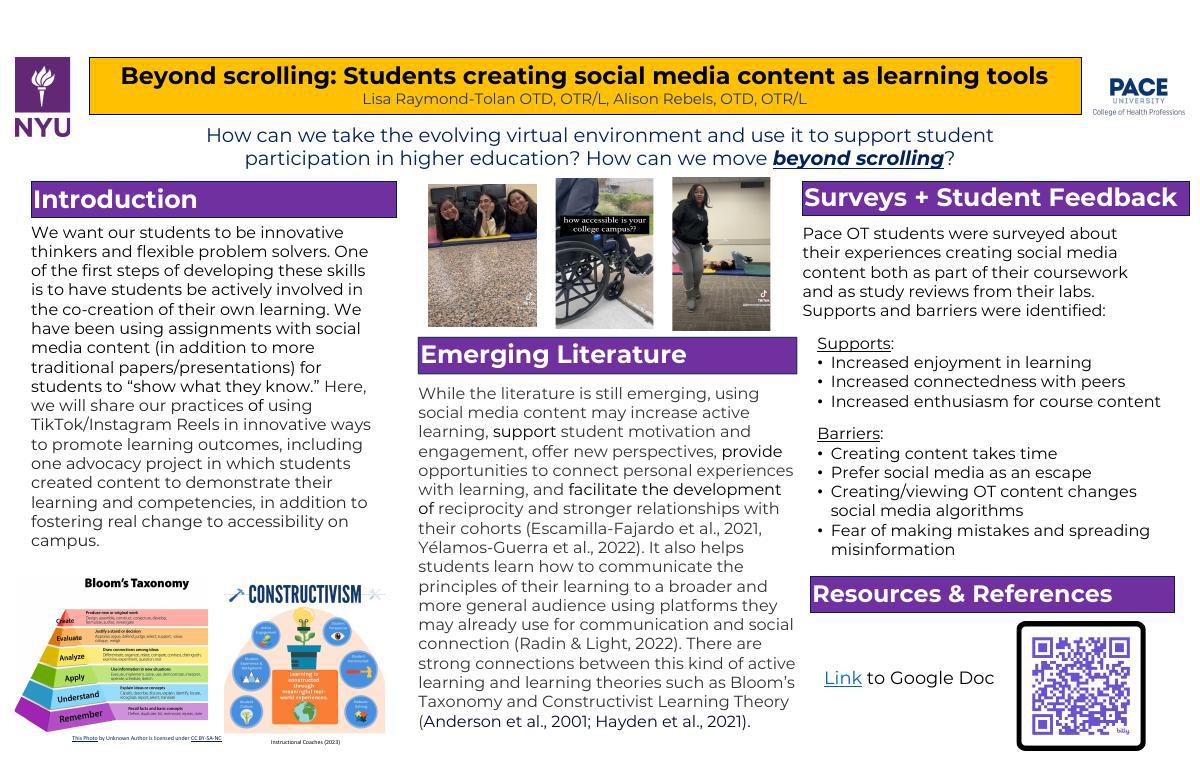
Introduction: Active student engagement in learning is essential in all higher education. We want our students to be innovative thinkers, flexible problem solvers, and curious about how things work in the world. One of the first steps of developing these skills is to “flip the classroom” and have students be actively involved in the co-creation of their own learning. Social media platforms like TikTok are a mainstay of our current landscape, and what’s being learned in our courses is an emerging content area.
Objectives: We will share social media practices at two Universities and ideas as to how we can use these platforms in innovative ways and promote learning outcomes. We will describe assignments where students created content to demonstrate their learning, understanding, and competencies, and share feedback from our students about their experiences.
Approach: Participants will engage in experiences creating social media content, rubrics and discussion about the process and applications to their own academic practices.
Practice implications: Using social media content may increase active learning, student motivation and engagement, offer new perspectives on and opportunities to connect personal experiences with learning, and develop reciprocity and stronger relationships with their cohorts. It also helps students learn how to communicate the principles of their learning to a broader and more general audience using platforms they may already use for communication and social connection.
Conclusion: When considering contexts in occupational therapy, interacting with and creating social media is a virtual context that is of particular relevance to many of our students.