
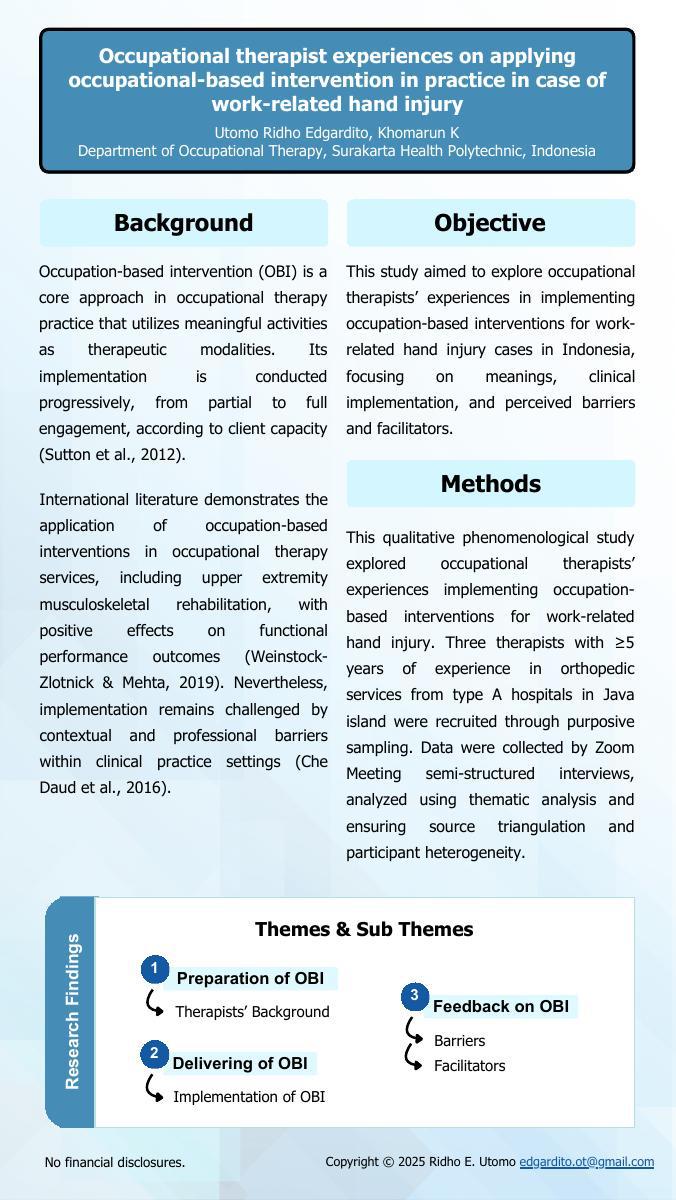
Introduction / Rationale: Occupation-based intervention (OBI) is a typical modality of occupational therapy that utilizes meaningful activities for clients. The trend in the use of OBI is not new, many literature also notes its use in hand rehabilitation settings.
Objectives: This study aims to determine how experience of Indonesian occupational therapists in implementing occupational-based interventions in cases of work-related hand injury.
Methods / Approach: The qualitative method uses a phenomenological approach with data collection through interviews with 3 participants and analyzed using thematic analysis techniques.
Results / Practice Implications: Three themes were obtained from the data analysis; (1) preparing OBI services, (2) providing OBI services and (3) giving feedback on OBI services. The therapist's reason for implementing OBI is because they want to apply professional values and willingness to learn, and also assess that OBI can be helpful, modifiable and powerful in service. In providing OBI services, therapists seek to involve clients on an occupational basis and utilize meaningful activities. The therapist's obstacles in implementing OBI include institutional factors, client factors and therapist factors. The therapist assesses practical experience, an adequate and collaborative work environment, and involvement in return to work can support the application of OBI.
Conclusion / Contribution to the occupational therapy profession: Implementing occupational-based interventions in Indonesian context, could showing the characteristics of our profession, facilitating clients effort to be independent and involving them in their roles and occupations, but there are also had some limitation when OBI is using in practice. The OBI experience in this study can also be adapted to occupational therapy services in other settings.