
Introduction/Rationale: Anatomy is a foundational component of occupational therapy (OT) education, yet many students face significant challenges in mastering this complex subject.
Objectives: This study aimed to evaluate the effectiveness of supplemental educational resources in improving student performance in a standalone OT anatomy course.
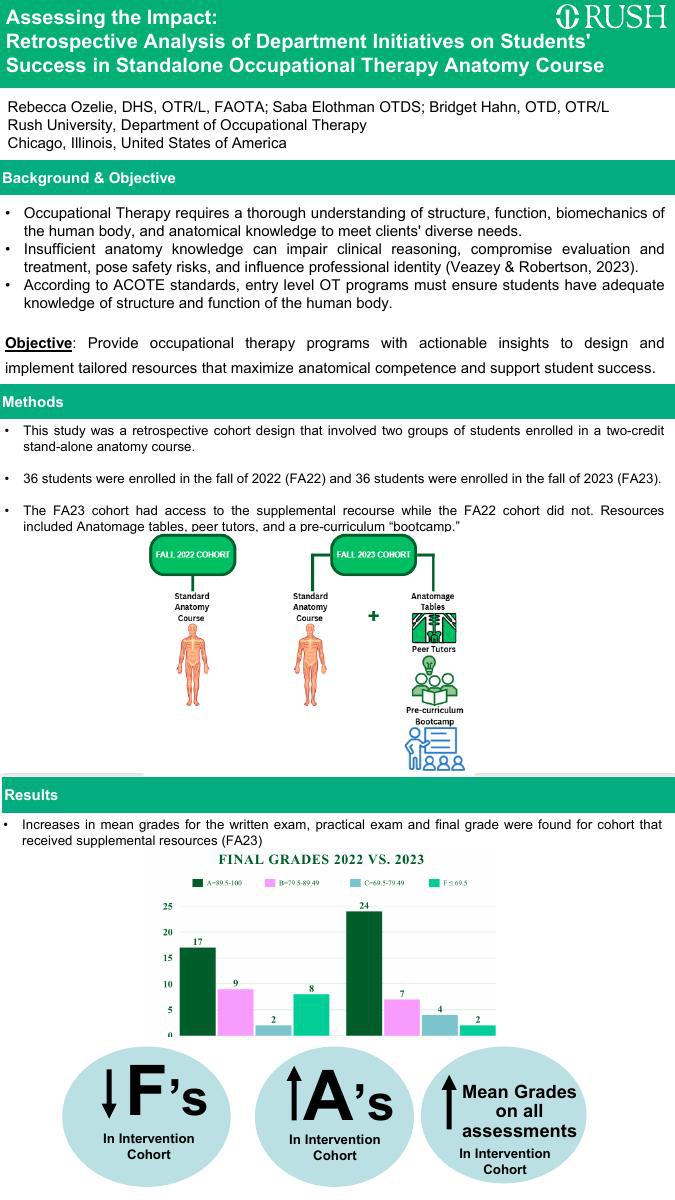
Methods/Approach: A retrospective cohort design was utilized to compare two groups of entry-level occupational therapy doctorate (OTD) students enrolled in Fall 2022 (n=36) and Fall 2023 (n=36). While both cohorts participated in a similar curriculum, the Fall 2023 cohort had access to additional resources, including an anatomy bootcamp, peer-led tutoring, Anatomage Tables, and interactive learning tools such as Kahoot quizzes. Student performance of both cohorts was assessed through written and practical exams conducted at three points during the semester.
Results/Practice Implications: Analysis using Mann-Whitney U tests revealed that although no statistically significant differences were found in the final course grades, the Fall 2023 cohort demonstrated higher mean scores on all assessments, with a significant improvement observed in practical exam 3. The additional resources appeared particularly effective in enhancing practical application skills and reducing the number of students receiving failing grades.
Conclusion/Contributions to OT profession: These findings underscore the potential of targeted, cost-effective interventions to improve anatomy outcomes for OT students. Implementing such resources can enhance student success, reduce academic setbacks, and better prepare future occupational therapists for clinical practice. This research aligns with the conference theme, "Inspiring Change, Innovating Futures," by proposing innovative strategies to address long-standing educational challenges in OT programs.