
Introduction/Rationale: The use of shared decision-making (SDM) to support self-directed arm training at home is a novel approach in stroke rehabilitation. While initial studies demonstrate its feasibility and effectiveness, foundational knowledge is needed to guide successful implementation. Integrating stakeholder perspectives and experiences with SDM will enhance understanding of how to effectively implement SDM in clinical practice to support stroke rehabilitation outcomes.
Objectives: To identify the facilitators and barriers to integrating SDM within the context of UE rehabilitation for individuals living in the community with chronic stroke.
Methods/Approach: A descriptive qualitative study using thematic analysis. Participants included experienced occupational therapists (n=3) with expertise in neurorehabilitation and individuals with chronic stroke (n=15).
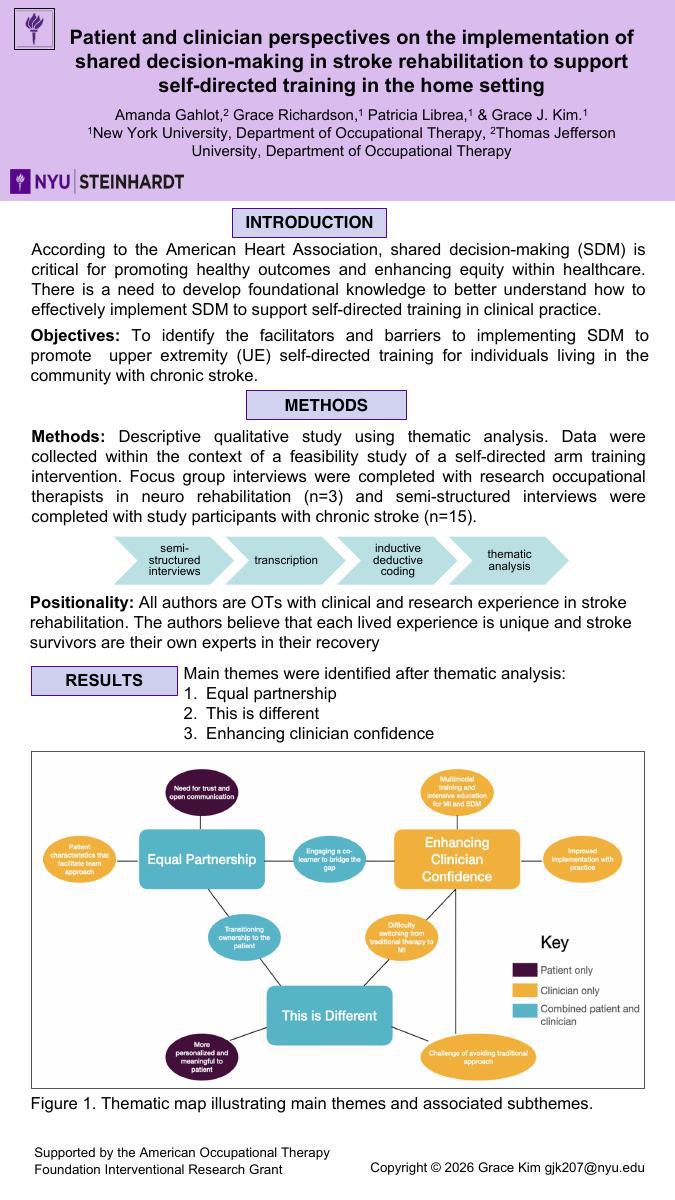
Results/Practice Implications: Three main themes, each with unique barriers, encapsulated clinician and patient experiences with SDM. (1) This is Different—barriers included patients’ perceived lack of readiness or stroke knowledge and clinicians’ struggle to shift to a “different way of thinking.” (2) Equal Partnership—communication barriers between clinicians and patients. (3) Enhancing Clinician Confidence—limited clinician training in SDM and a lack of confidence in its use
Conclusion/Contribution to the profession: To understand how to effectively implement SDM in clinical practice, the Consolidated Framework for Implementation Research (CFIR) and the Expert Recommendations for Implementing Chance (ERIC) matching toolkit were used to delineate implementation stategies based on our key barriers. Common implementation strategies included: conducting educational meetings and local consensus discussions, identifying and preparing SDM champions and opinion leaders, conducting educational outreach visits, and developing and distributing educational materials. The identified strategies can be used to inform future implementation studies to support SDM education and training for clincians and patients within stroke rehabilitation settings.