
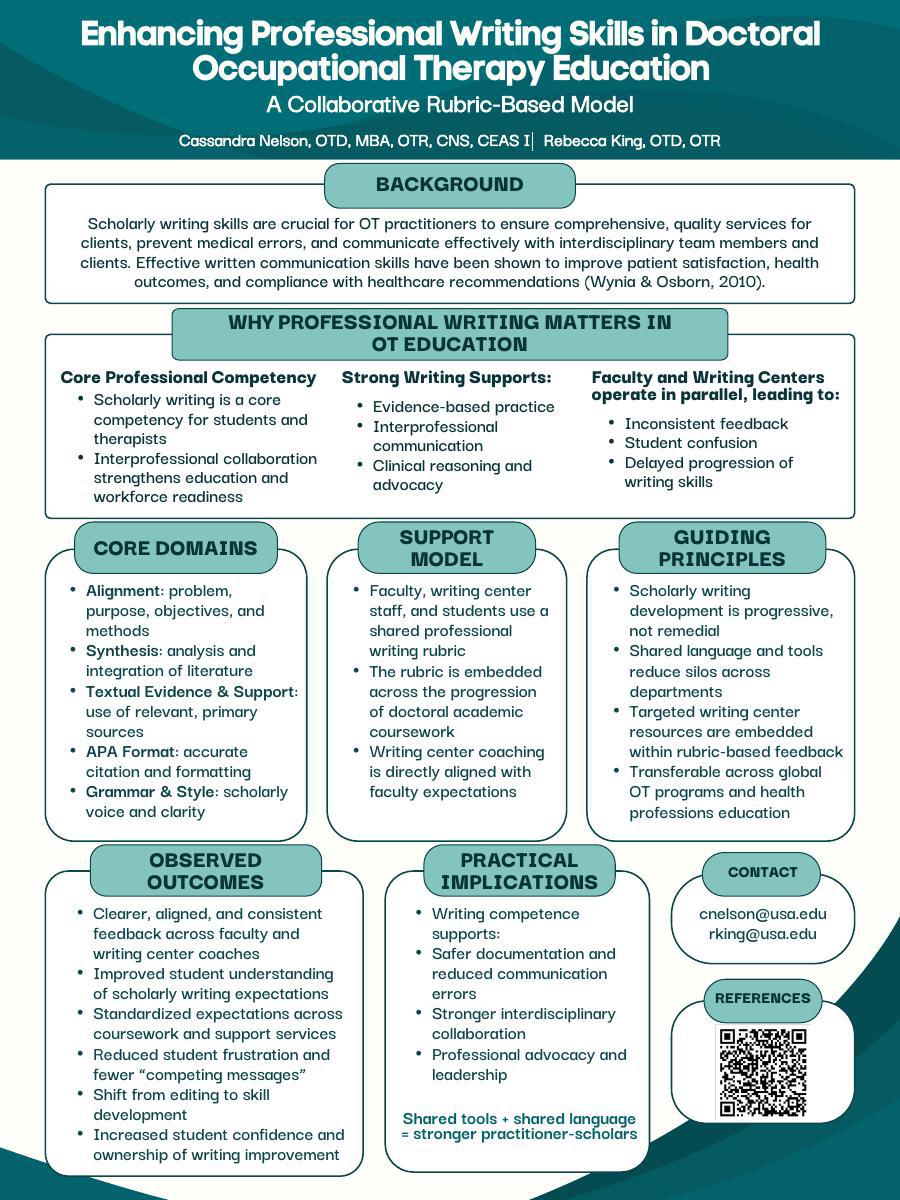
Rationale: Scholarly writing skills are integral for entry level doctoral occupational therapy (OT) students. Scholarly writing is considered professional competency and supports high quality professional practice, critical thinking skills, development of research skills, and improved communication. Doctoral OT (OTD) students need instructional strategies from faculty that promote writing skill development, clear and concise feedback, and structure in grading and construction of writing assignments. The use of a comprehensive rubric supports interdisciplinary communication and targeted feedback.
Objectives:
Understand student experience including clarity of feedback, interdepartmental communication, and components of scholarly writing.
Understand faculty experience including ease of use, interdepartmental communication and effectiveness of improving students’ writing skills.
Understand writing center coach experience including ease of use, interdepartmental communication and effectiveness of rubric in guiding writing center appointments.
Approach: This quantitative study examined the effectiveness and satisfaction of use of a writing rubric developed for OTD students to enhance their scholarly writing skills using a collaborative model between student, faculty, and a writing center.
Practice Implications: Through a collaborative approach with students, faculty, and writing center coaches, professional writing skills can be developed and supported. Scholarly writing skills have been shown to support effective communication with interdisciplinary team members, enhance student writing skills and promote advocacy and research within the profession.
Contribution to the profession: With an increased focus on scholarly writing, future OTs can build the confidence needed to ensure comprehensive, quality services for clients and promote research and development within the profession to serve the global community and meet the needs of the population.