
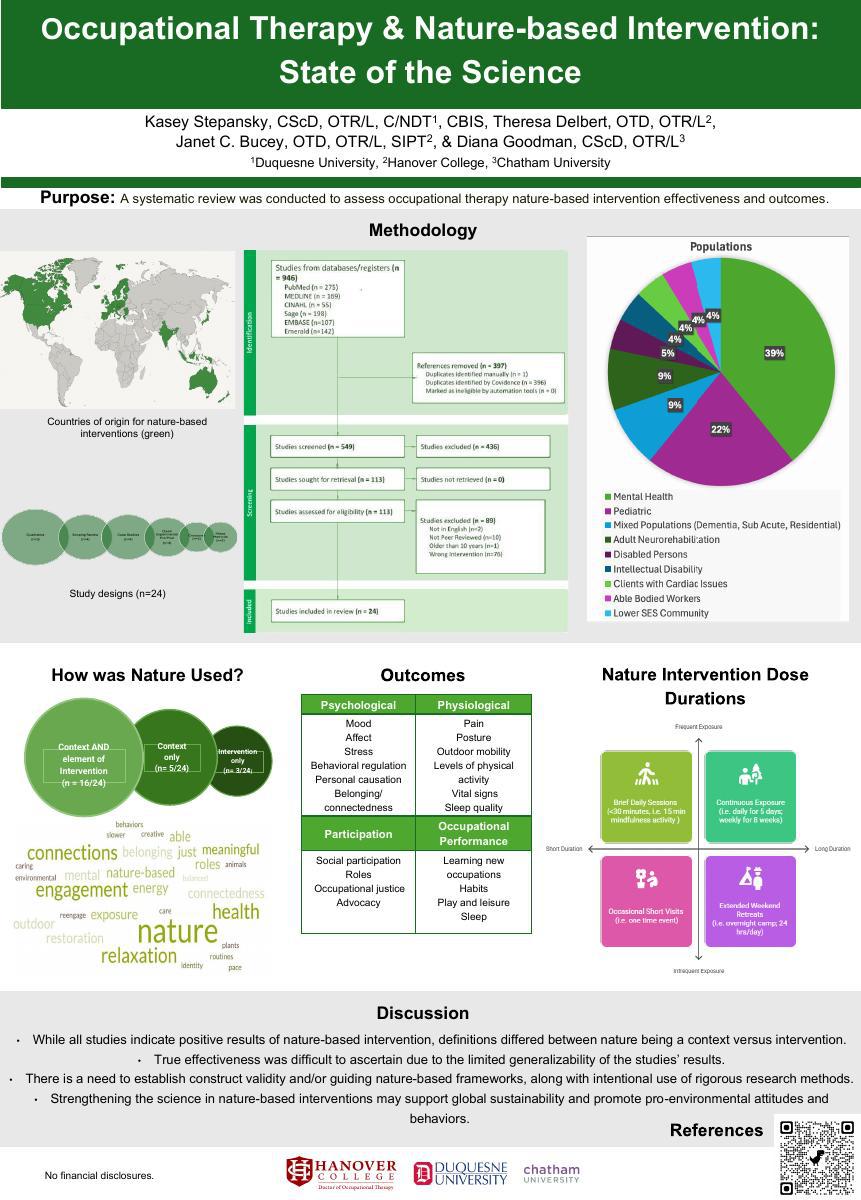
Introduction / Rationale: The use of nature as a healing context and modality for rehabilitation is a re-emerging trend post-COVID-19 for occupational therapy. Human and nature connectedness supports sustainability mindsets and can be fostered through nature-based intervention. The health benefits of nature provide both physiological and psychological outcomes however it's use in occupational therapy is limited by the evidence defining this practice.
Objectives: Define the types of interventions currently in use within occupational therapy intervention using nature as a context and modality. Assess effectiveness outcomes of occupational therapy nature-based intervention in relation to occupational performance.
Methods / Approach: A systematic review was conducted to assess the effectiveness of nature-based interventions for individuals receiving occupational therapy considering the outcome categories of physical health, cognition, emotional health, and participation. Database searches were conducted in CINAHL, PubMed, Medline, SAGE, and Cochrane.
Results / Practice Implications: Preliminary analysis of evidence indicates primarily low levels of study quality investigating effectiveness of nature-based occupational therapy intervention including qualitative and small cohort studies. A variety of outcomes including attention, quality of life, participation, occupational performance, and stress levels have been identified.
Conclusion / Contribution to the occupational therapy profession: Occupational therapists would benefit from evidence-based guidance to ensure best practice with nature-based intervention to elicit supportive occupational performance outcomes. The state of the science of occupational therapy in nature-based interventions can be supplemented by intentional development of randomized controlled trials, use of control groups, and clearly defined outcomes. In strengthening our science in nature-based interventions, we may also contribute to global sustainability efforts by enhancing pro environmental attitudes and behaviors.