
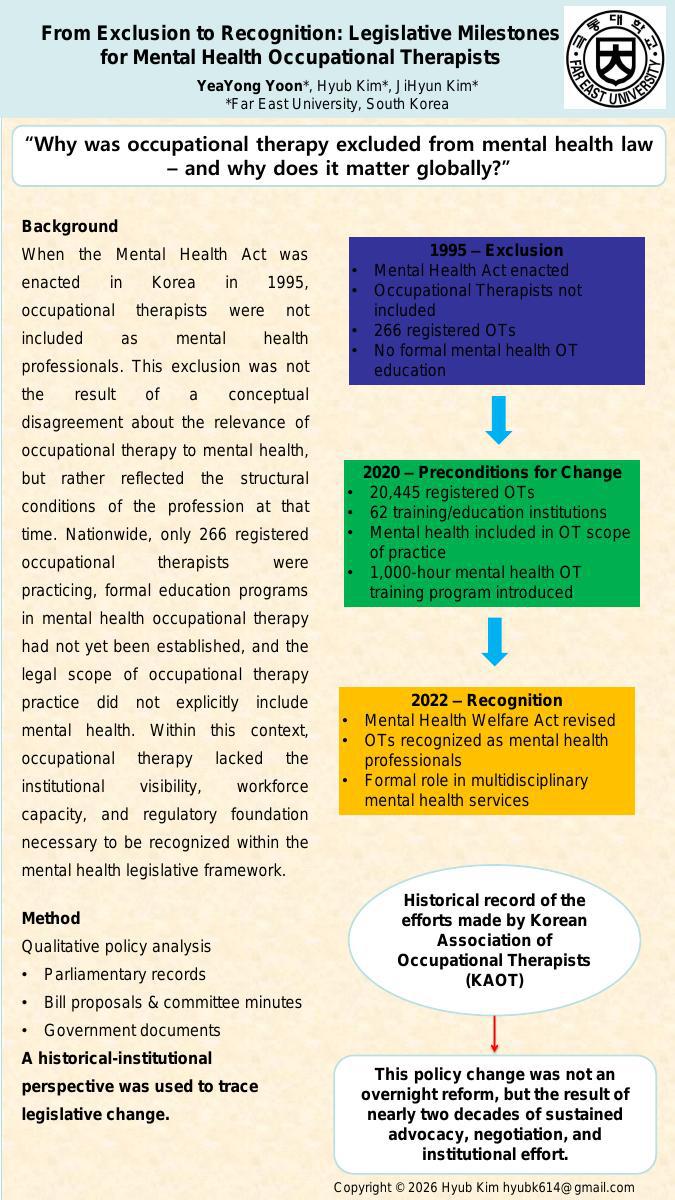
Introduction: Since the 1995 Mental Health Act in South Korea, efforts have aimed to integrate occupational therapists into mental health services, culminating in a historic legislative revision. Despite its significance, the National Assembly’s legislative process remains underexplored.
Objectives: This study aims to examine the legislative process that enabled this change, highlights current challenges, and proposes strategies for future policy development.
Methods: This study details the legislative journey of the 20th National Assembly (2018–2020), which passed the Mental Health Welfare Act, and the 2022 revision of its enforcement ordinance.
Results: In 1995, occupational therapists were absent from the Mental Health Act due to limited numbers (266 licensed therapists) and lack of formal training programs. By 2020, their presence had expanded significantly, with 20,445 licensed therapists, 62 training institutions, and mental health explicitly included in their scope of practice. A 1,000-hour mental health occupational therapy training program now operates annually, contributing to the Act’s revision. The 2022 amendment of the Mental Health Welfare Act recognizes occupational therapists as mental health professionals, granting a formal role in interdisciplinary mental health services and expanding professional opportunities.
Conclusion: Despite this progress, three key challenges remain: (1) establishing specialized qualifications for mental health occupational therapists, (2) expanding training institutions to meet growing demand, and (3) developing insurance reimbursement policies to support mental health occupational therapy services. Addressing these issues is essential to further strengthening occupational therapy’s contribution to mental health care and ensuring continued legislative advancement.