
Introduction/ Rationale:
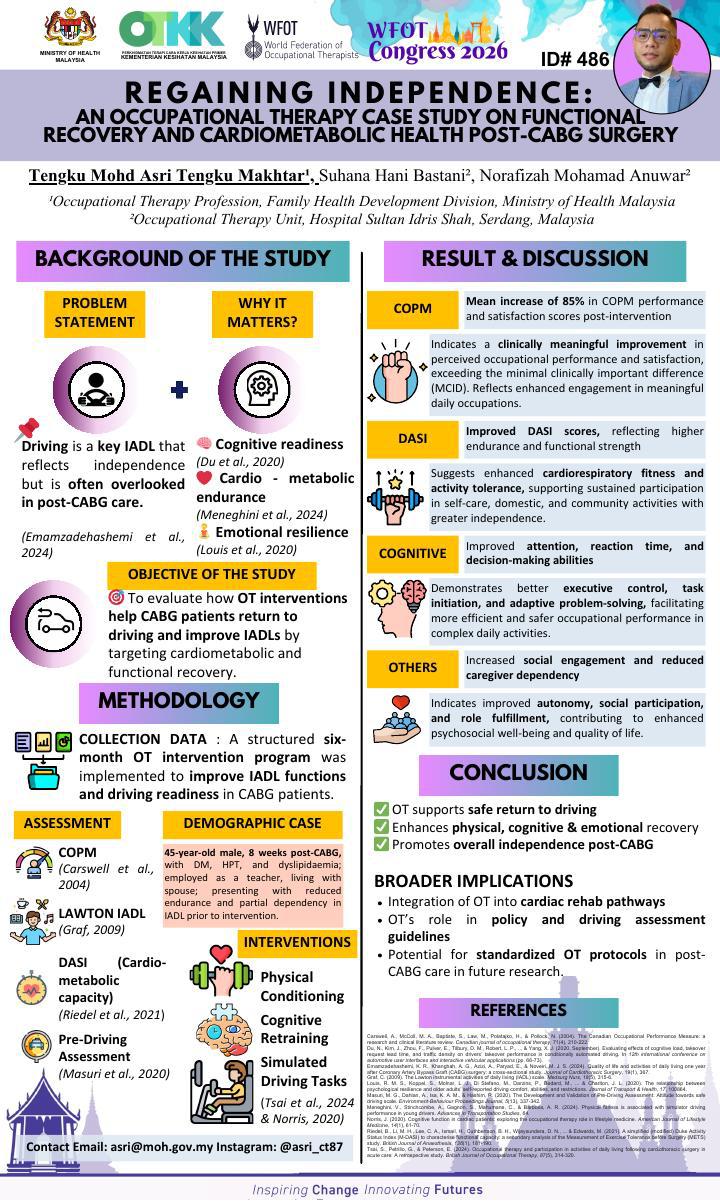
Driving is one of the important compenent in instrumental activity of daily living (IADL) that signifies functional independence. For individuals recovering from Coronary Artery Bypass Graft (CABG) surgery, resuming driving reflects not only physical rehabilitation but also cognitive readiness and emotional resilience. This case study explores the role of occupational therapy (OT) in optimizing driving readiness while addressing cardiometabolic recovery to enhance overall independence.
Objectives:
This study aims to evaluate the effectiveness of an OT intervention in improving driving readiness and IADL performance among post-CABG patients, emphasizing the integration of cardiometabolic rehabilitation within occupational therapy practice.
Methods/ Approach:
A structured six-month OT intervention was implemented, incorporating physical conditioning, cognitive retraining, and simulated driving tasks. Assessments included the Canadian Occupational Performance Measure (COPM), Lawton IADL Scale, Duke Activity Status Index (DASI), and a Pre-Driving Assessment to evaluate safety. Interventions were tailored to address cardiometabolic health while optimizing functional recovery.
Results/ Practice Implications:
Findings indicated an 85% improvement in COPM scores for driving-related tasks, alongside significant gains in physical endurance and strength (DASI scores). Cognitive retraining enhanced attention, reaction time, and decision-making, contributing to improved Pre-Driving Assessment outcomes. Participants reported increased confidence, reduced anxiety, and greater social engagement, underscoring the holistic benefits of OT in recovery. Long-term follow-up confirmed sustained functional independence in driving and other IADLs.
Conclusion/ Contribution to the OT Profession:
This study highlights the crucial role of OT in facilitating post-CABG functional recovery, reinforcing the need for OT-driven cardiometabolic rehabilitation. The findings support integrating OT into multidisciplinary cardiac care and advocate for standardized guidelines in assessing driving readiness among post-CABG patients.