
Introduction: For people with developmental disabilities (DD), lack of transportation hampers full integration into society and overall quality of life. Interventions that enable community mobility by removing transportation barriers are critical to supporting the rights of individuals with DD. Transportation (in)justice is rooted in a history of exclusion of people with DD. While systematic change is needed to ensure transportation systems are inclusive, there is an immediate need to prepare people with DD to anticipate and respond to barriers in the current system.
Objective: This session will provide an overview of the components of individual community mobility plans and associated evidence-based intervention resources.
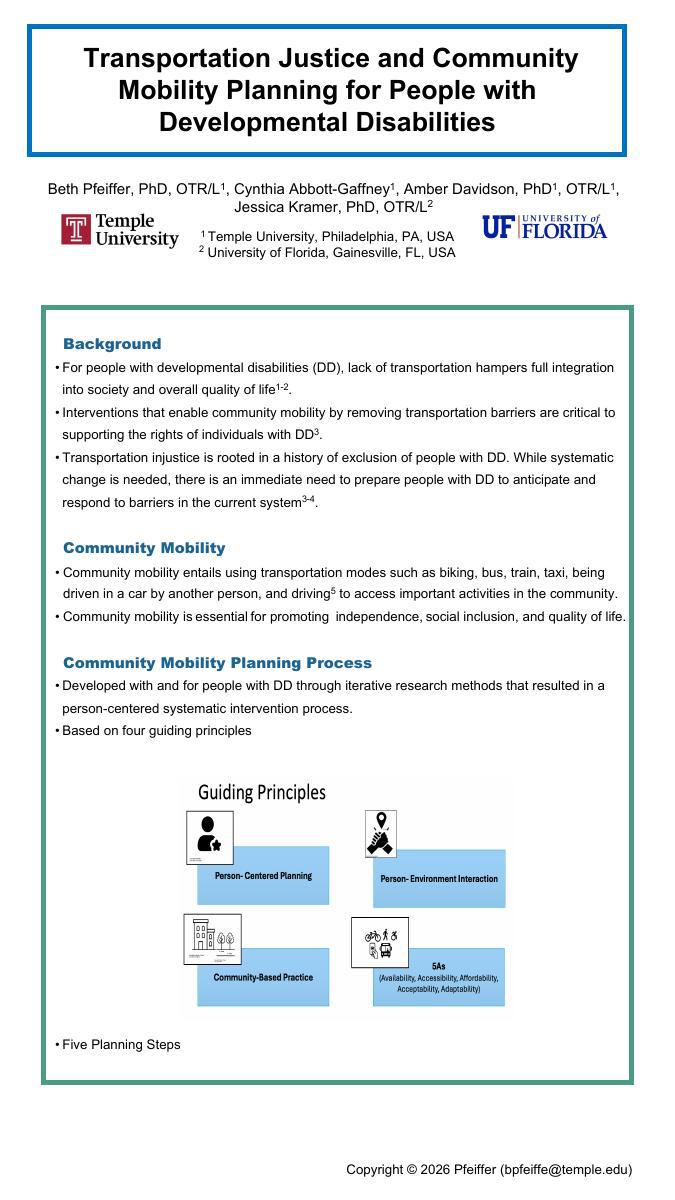
Methods: Community mobility plans were developed through iterative research methods that resulted in a person-centered systematic intervention process. The core components of community mobility planning include: 1) identifying person-centered community mobility priorities; 2) assessing skills and resources; 3) setting person-centered goals; and 4) interventions and resources. This session will provide an overview of each of the components of the community mobility planning process and the evidence-based interventions and resources.
Practical Implications: Community mobility is essential for promoting independence, social inclusion, and quality of life. As an intervention process designed to be replicable and feasible for use in real-world contexts, community mobility plans have the potential to address a critical need to improve the ability of individuals with DD to travel in the community for essential adult activities.
Significance: Community mobility plans fill a significant gap in addressing transportation injustices for people with DD through person-centered occupational-based interventions.