
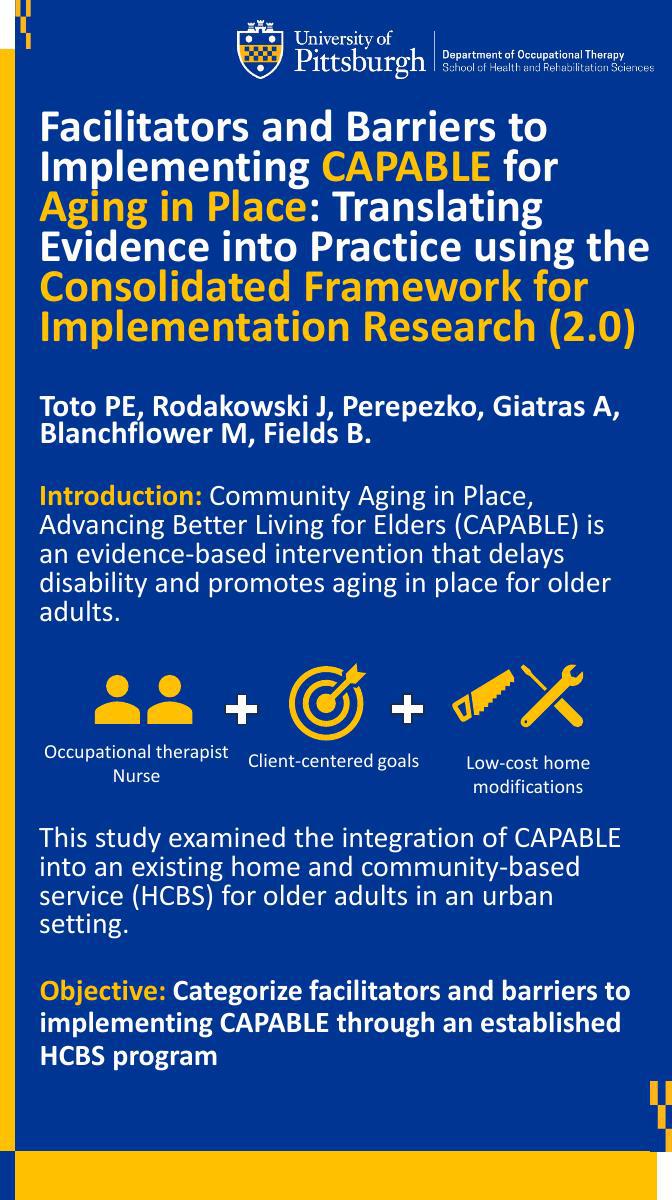
Introduction: Community Aging in Place, Advancing Better Living for Elders (CAPABLE) is an evidence-based intervention combining occupational therapy, nursing and low-cost home modifications to delay disability, prevent hospitalizations and avoid institutionalization in community older adults. However, little information is known about how to translate this research into “real world” practice. This study examined the integration of CAPABLE into existing home and community-based services (HCBS) in an urban region.
Objective: Categorize facilitators and barriers to implementing CAPABLE through an established HCBS program.
Methods: As part of an effectiveness-implementation hybrid trial type 1 study implementing CAPABLE through an HCBS (N=104), a summative evaluation of qualitative data was completed using the Consolidated Framework for Implementation Research (CFIR 2.0). Multiple sources of data were collected, including 2 focus groups, provider notes, a tracking log, and 20 CAPABLE interventionist meetings. Data were analyzed using a framework method and validated through a negative case analysis approach in NVivo 14 Pro.
Results: Key themes aligned with 11 constructs from 5 domains of the CFIR 2.0. Facilitators included innovation adaptability, innovation cost, policies and laws, relational connections, communication, and innovation deliverers. Barriers included innovation complexity, culture, innovation recipients, engagement and doing of the planned process over time.
Conclusion: Results enhance understanding of contextual factors that can influence the implementation of preventative interventions into existing HCBS. Strategies to overcome barriers to implementing aging in place programs like CAPABLE include simplifying recruitment materials, targeting older adults with recent onset of disability, and maximizing consistency with intervention delivery to improve dissemination and sustainability.