
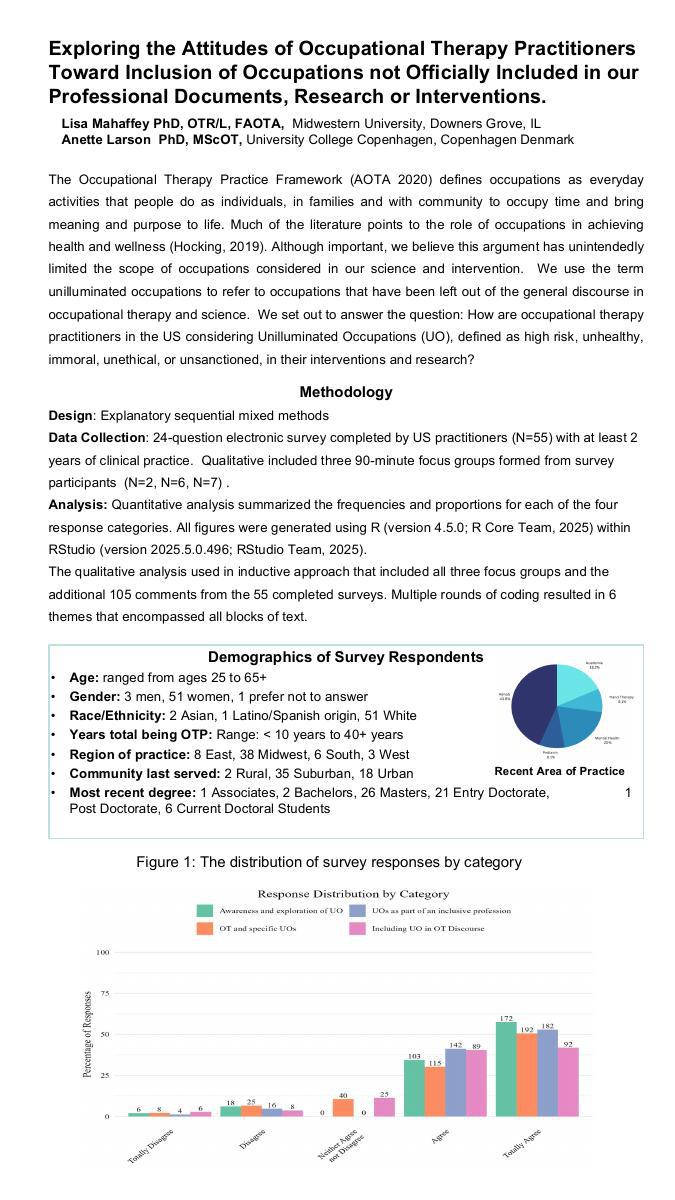
Introduction/Rationale: Practitioners around the world are engaging in discourse related to occupations that are not recognized in our literature or research because they are not perceived as acceptable, or as contributing to health or well-being. This mixed methods study used the term Unilluminated Occupations (UO) to categorize these occupations.
Objectives: Explore practitioner attitudes toward including Unilluminated Occupations in our discourse, research and general scope of practice
Methods/Approach: This study is a convergent mixed methods study using a survey and focus groups to answer the question; How are occupational therapy practitioners considering occupations that are high risk, unhealthy, immoral, unethical, or unsanctioned in their intervention and research. Only 55 surveys were completed limiting the power of the quantitative responses. Fifteen people participated in one of three 90-minute focus groups. The thematic qualitative analysis resulted in 6 themes. Qualitative responses from the survey were included in the qualitative analysis.
Results/Practice Implications: Themes included: Client-centered means understanding all aspects of clients; occupations are complex and contextual; the profession must grapple with inherent bias in its tenants; ideas of what constitutes therapy determines the ethical boundary line; harm reduction is a health promoting service; and recognizing UO in the profession will require ongoing dialogue and practice resources.
Conclusion/Significance to the OT profession: All practitioners will encounter situations where a person is engaging in UO in their career. More structured discourse around this topic can lead more person-centered, holistic occupation-based care.