
Introduction: Burnout is a chronic condition that negatively impacts employees both physically and psychologically. It can lead to reduced job performance, where individuals do only the bare minimum, struggle with creativity, and lower their standards of work. In healthcare, burnout not only affects rehabilitation practitioners’ well-being but also compromises patient outcomes. ICD 11 defines and recognizes burnout as a workplace phenomena, and researchers in many countries have documented concerning burnout statistics for healthcare workers.
Objectives: The purpose of this study was to ascertain the perspectives of rehabiliatation practitioners working within skilled nursing and assisted living facilities to help determine root causes of burnout symptoms.
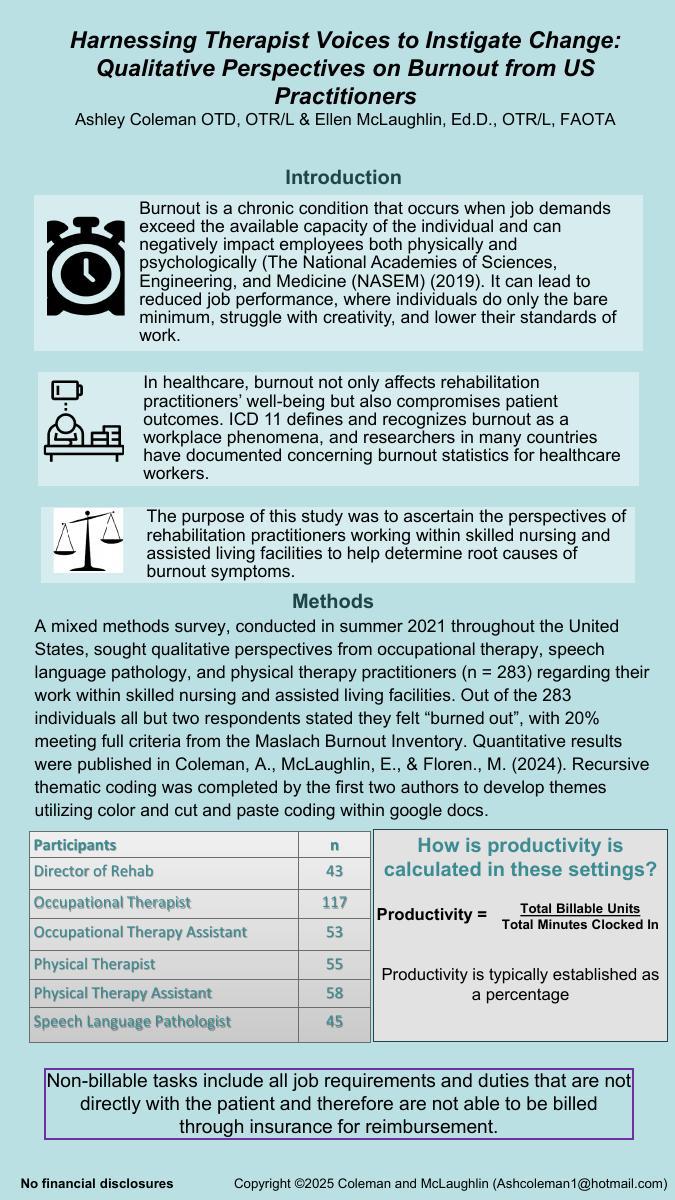
Methods: A mixed methods survey, conducted in summer 2021 throughout the United States, sought qualitative perspectives from occupational therapy, speech, and physical therapy practitioners (n = 283) regarding their work within skilled nursing and assisted living facilities. 283 individuals where all but two respondents stated they felt “burned out”. Six themes were extracted from the responses, which included: “What does not get completed,” “Lack of leadership and support,” “Not everything is billable,” “Who cares about quality of care?,” “Unaccounted disruptions”; “What gets lost when you focus on productivity?,” and “Personal needs.”
Practice Implications: Analyzing perspectives on and factors contributing to burnout can aid in addressing practitioner concerns and improving future overall health and well being. Enhancing coping strategies, stress management, improved workplace conditions, and providing supportive, resource rich work environments are some of the many recommendations described.
Conclusion: Facilitating improved working conditions and therapist support can decrease feelings of burnout and improve client based care.