
Introduction
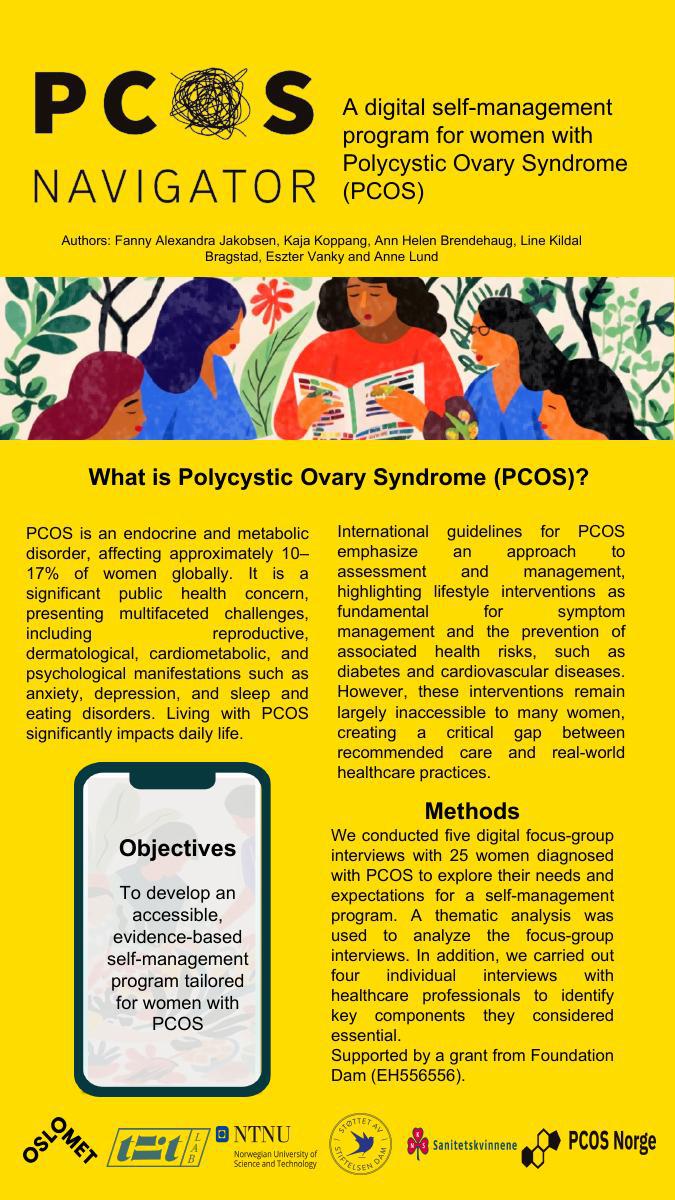
Polycystic Ovary Syndrome (PCOS) is a prevalent yet often underdiagnosed endocrine and metabolic disorder, affecting approximately 10–17% of women globally. PCOS is a significant public health concern, presenting multifaceted challenges, including reproductive, dermatological, cardiometabolic, and psychological manifestations such as anxiety, depression, and sleep and eating disorders. Living with PCOS significantly impacts daily life.
International guidelines for PCOS emphasize an approach to assessment and management, highlighting lifestyle interventions as fundamental for symptom management and the prevention of associated health risks, such as diabetes and cardiovascular diseases. However, these interventions remain largely inaccessible to many, creating a critical gap between recommended care and real-world healthcare practices.
Objectives
The PCOS Navigator project aims to develop an accessible, evidence-based self-management program tailored for women with PCOS. Perspectives from both women with PCOS and healthcare professionals will inform the program's content, which will be delivered via a digital platform.
Methods
Focus-group interviews with women diagnosed with PCOS will be conducted to explore their needs and expectations for a self-management program. Additionally, individual interviews with healthcare professionals will identify key components they deem essential.
Results
The interviews are scheduled for spring 2025, with findings to be presented at the WFOT Conference in 2026.
Conclusion
The PCOS Navigator self-management program is co-developed by women with PCOS, healthcare professionals, systemic designers, and researchers. It will offer a structured innovative lifestyle intervention to support women in managing their everyday lives with PCOS, highlighting its relevance to occupational therapists engaged in occupation based and person-centered interventions.