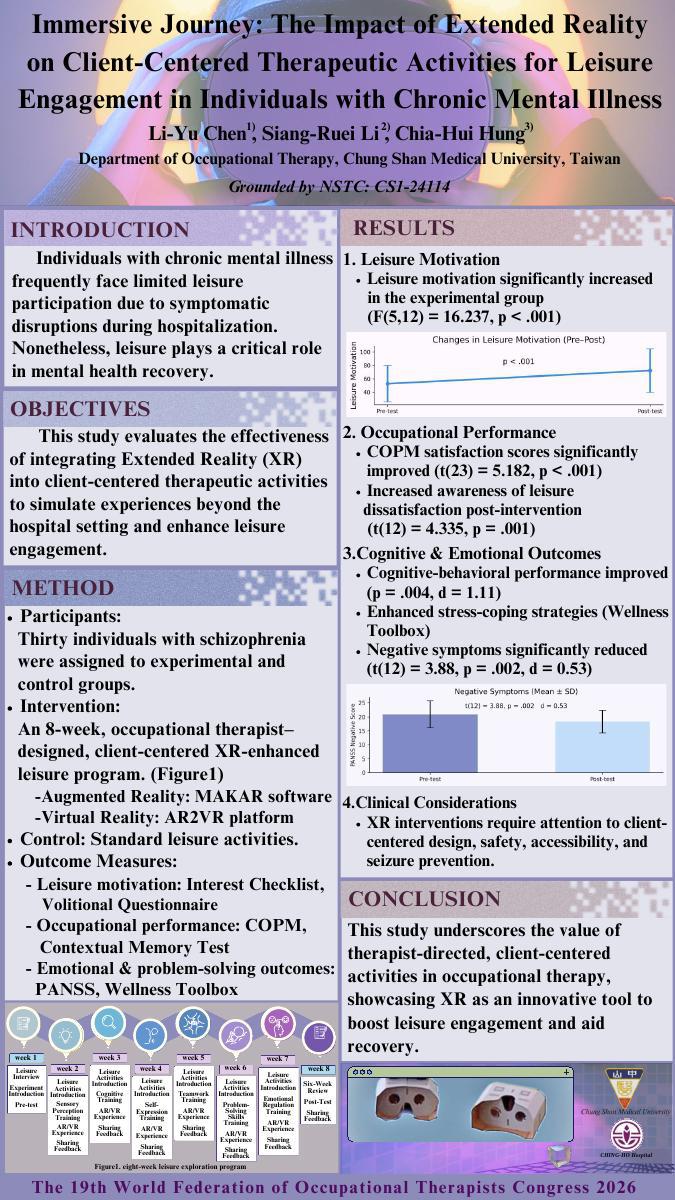
Introduction: Individuals with chronic mental illness frequently face limited leisure participation due to symptomatic disruptions during hospitalization. Nonetheless, leisure plays a critical role in mental health recovery.
Objectives: This study evaluates the effectiveness of integrating Extended Reality (XR) into client-centered therapeutic activities to simulate experiences beyond the hospital setting and enhance leisure engagement.
Methods: Thirty schizophrenia-diagnosed participants from a psychiatric hospital were divided into experimental and control groups. Over eight weeks, the experimental group engaged in XR-enhanced leisure activities designed by occupational therapists based on client needs, utilizing augmented reality with MAKAR software and virtual reality through the AR2VR platform, while the control group engaged in standard activities. Outcome measures included leisure motivation (Interest Checklist, Volitional Questionnaire), cognitive and behavioral performance (Canadian Occupational Performance Measure [COPM], Contextual Memory Test), and emotional and problem-solving strategies (Positive and Negative Syndrome Scale [PANSS], Wellness Toolbox).
Results: Results indicated significant improvements in the experimental group's leisure motivation (F(5, 12)=16.237, p<.000) and cognitive and behavior abilities (p=0.004, Cohen’s d=1.11) and enhanced COPM satisfaction scores (t(23)=5.182, p<.000). Notably, the experimental group showed significant changes in post-intervention (t(12)=4.335, p=0.001), expressing continuous dissatisfaction with leisure participation, unlike the control group, which remained largely unaware of leisure issues. Additionally, reductions in emotional symptoms, particularly negative symptoms (t(12)= 3.88, p = .002, Cohen’s d=0.53), and increased strategies for coping with stress in Wellness Toolbox. Considerations for implementing XR in psychiatric settings, including prioritizing client-centered design, safety, accessibility, and seizure prevention, are provided.
Conclusion: This study underscores the value of therapist-directed, client-centered activities in occupational therapy, showcasing XR as an innovative tool to boost leisure engagement and aid recovery.
