
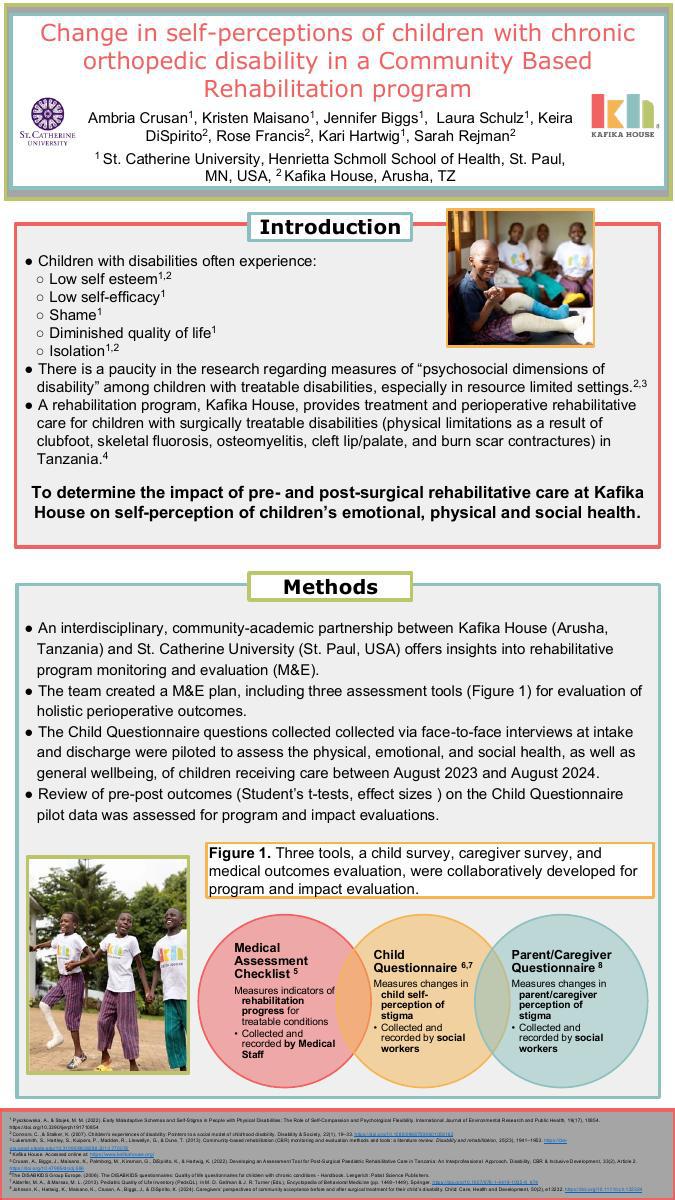
Introduction: Chronic illnesses and disabilities are associated with low self esteem, self-efficacy, shame, diminished quality of life, and isolation. However, there is a paucity in the research regarding self-perception among children with treatable disabilities, especially in resource limited settings. A surgical rehabilitation program, Kafika House, provides surgical treatment and perioperative rehabilitative care for children with surgically treatable disabilities in Tanzania.
Objectives: To determine the impact of pre- and post-surgical rehabilitative care at Kafika House on self-perception of children’s emotional, physical and social health.
Methods: The child questionnaire survey questions collected at intake and discharge were piloted to assess the physical, emotional, and social health as well as general wellbeing of children receiving care between August 2023 and August 2024.
Results: Significant differences (p<0.05) and effect sizes with large magnitude between the nine childrens’ perspectives at intake and discharge were present in all categories assessed. The greatest outcomes of the rehabilitative program were in emotional impact scores, which increased by 187%, and independence, in which score means increased 90%. The five questions addressing general wellbeing and physical capacity showed more moderate increases in score means (49% and 51%, respectively). Social inclusion scores increased by the least, showing a 30% increase between intake and discharge.
Conclusion: These pilot results demonstrate a positive impact on self-perception of children’s physical, emotional, and social health during perioperative rehabilitation, demonstrating the impact of Kafika House’s mission to provide high love, low cost care for children with surgically treatable disabilities.
Funding Sources: GHR Foundation