
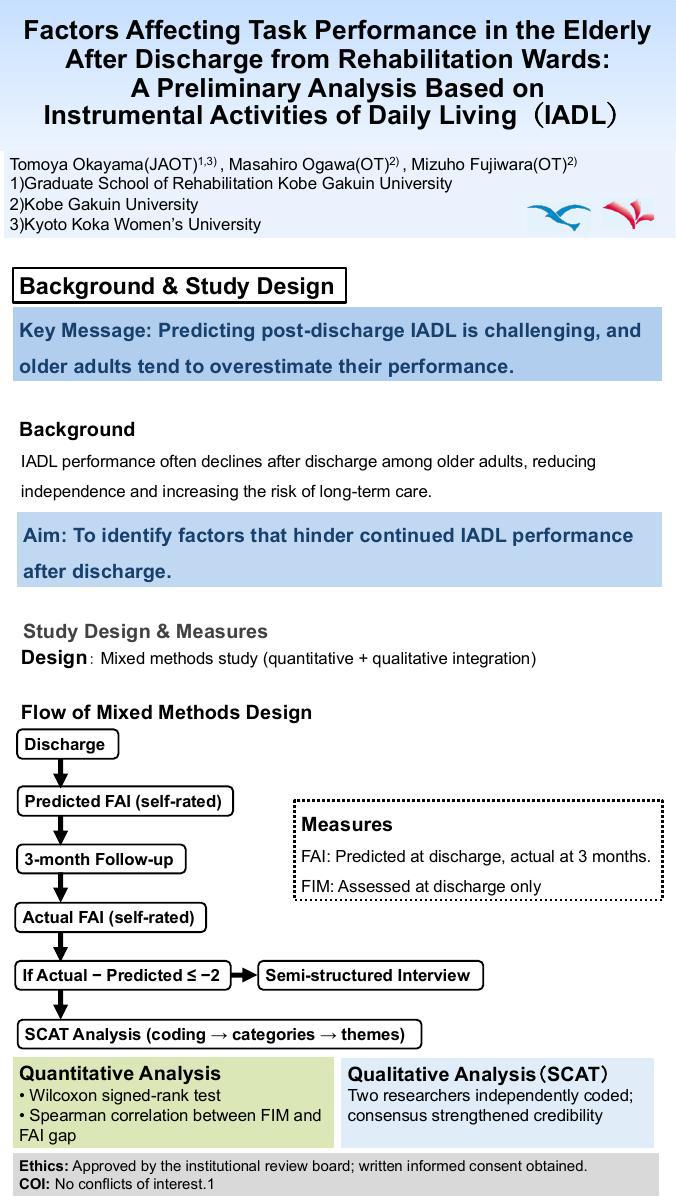
Introduction: Often, occupations performed during hospitalization in rehabilitation wards cannot be continued after discharge (Kimura et al., 2017). Consequently, a decline in the ability to perform Instrumental Activities of Daily Living (IADL) among the community-dwelling older adults leads to reduced physical activity (Horikoshi et al., 2021). This study investigates the continuity of IADLs among older adults after discharge from rehabilitation wards and identifies factors hindering this ability.
Methods: Using a mixed-methods convergent design, we interviewed 28 participants (6 males and 22 females; aged ≥65 years) who were discharged from Hospital A, and were capable of completing the Frenchay Activities Index (FAI) and providing valid interview responses. Semistructured interviews were conducted with patients showing a decline in FAI scores. Quantitative data at discharge and 3 months after discharge were compared between groups. In addition causal relationships were analyzed with the Functional Independence Measure (FIM) and environmental factors. Qualitative data were analyzed using Steps for Coding and Theorization (SCAT).
Results: The mean age of the participants was 77.8 years. A significant relationship was found between FAI change and FIM at discharge (p = 0.03, β = −0.43). Furthermore, the interviews revealed that changes in the physical condition, roles, and environment contributed to a decline in FAI.
Discussion: The study highlights the need to provide continuous professional support to older adults to help them perform IADL tasks after discharge from rehabilitation wards.