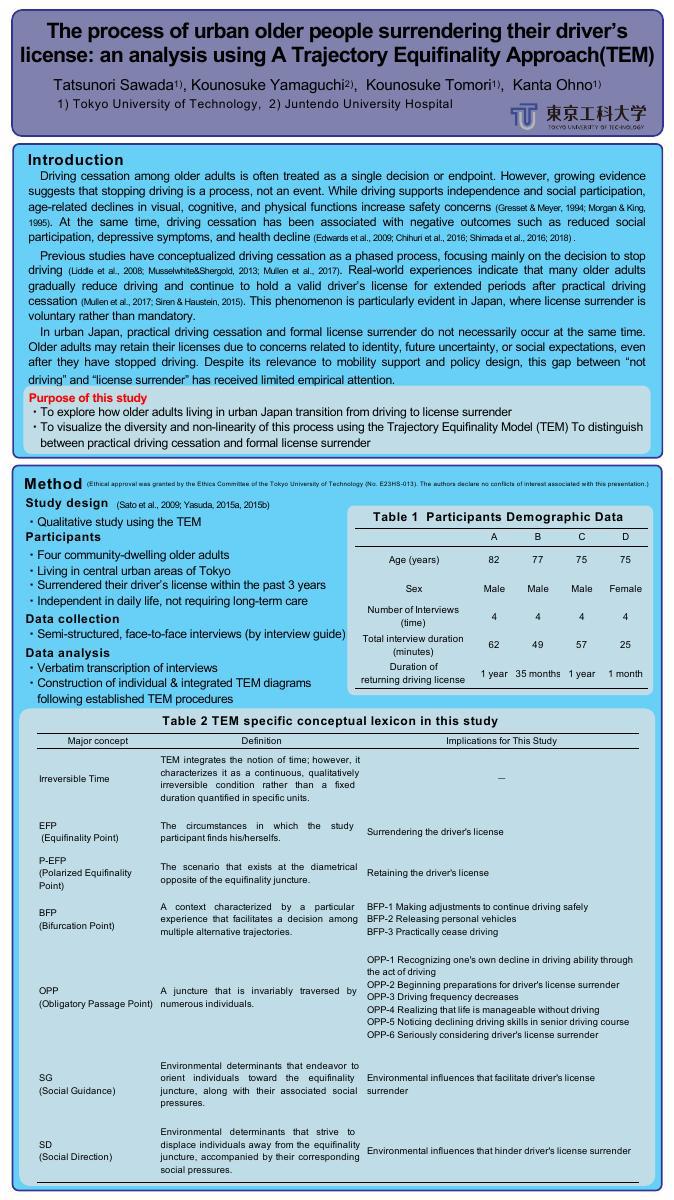
Introduction: The aging society raises concerns about older adults' driving abilities. Research has explored factors influencing driving cessation, with public transportation use being a key topic. However, studies focusing on the process of driving cessation and license surrender, particularly in urban areas, remain limited.
Objectives: This study explored the driving cessation process among older adults in urban Japan using the Trajectory Equifinality Model (TEM).
Methods: Semi-structured interviews were conducted with four participants (aged 75–82). We recruited four qualified older based on the following criteria: 1) Individuals who reside in Tokyo's 23 wards and have surrendered their driver's license within the past three years. 2) Healthy older adults aged over 65 older. 3) Individuals who received an explanation of the research objectives in advance and provided written consent to participate in the study. Each participant provided written informed consent prior to their participation in the study. Ethical approval was granted by Tokyo University of Technology and the authors declare no conflicts of interest associated with this manuscript.
Results: Analysis revealed four phases: (1) Driving continuation, balancing risks and convenience; (2) Driving Cessation preparation, involving lifestyle adjustments; (3) Lifestyle confidence, gaining comfort with a life without driving; and (4) License surrender decision, culminating in formal license surrender. A key finding was the distinction between practical driving cessation and formal license surrender, which do not always coincide. Factors influencing this process included familiarity with public transportation, social roles, financial concerns, media exposure, and alternative identification options.
Discussion: The findings suggest that early planning, awareness of mobility alternatives, and individualized support can facilitate a smoother transition away from driving.
