
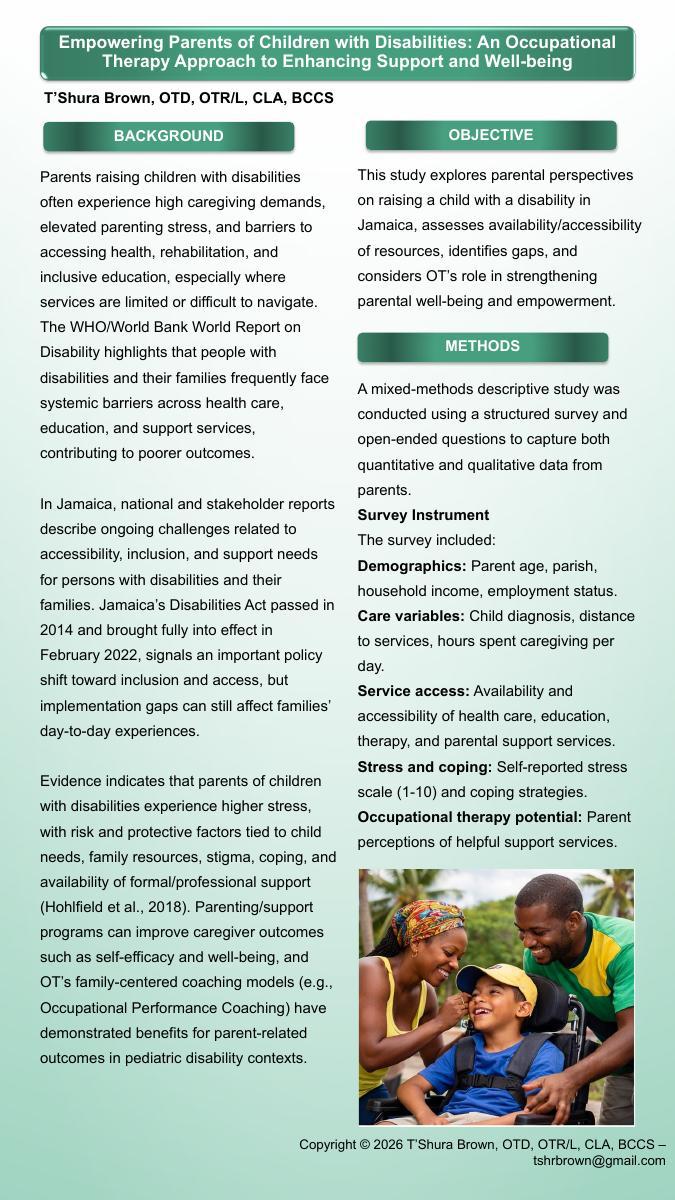
Introduction / Rationale: Parents raising children with disabilities encounter significant challenges related to caregiving, navigating support services, and maintaining their well-being. Limited resources and systemic barriers contribute to stress, impacting both caregiver and child well-being. This study explores parental perspectives on raising a child with a disability in Jamaica; assesses the availability and accessibility of resources; and identifies gaps in support services.
Objectives:
- Identify key challenges faced by parents of children with disabilities in Jamaica
- Identify the adequacy and accessibility of existing community resources in Jamaica
- Explore occupational therapy’s role in developing programs that promote parental well-being and empowerment
Methods / Approach: A mixed-methods design was employed. Parents across various socioeconomic backgrounds and parishes were surveyed to identify common stressors, coping strategies, and the extent to which current services meet parental needs.
Results / Practice Implications: Findings indicate disparities in access to essential services such as health care and education, increased caregiver burden, and a need for structured parental support. Occupational therapy interventions can promote advocacy, stress management, and skill-building to enhance family resilience. The preliminary findings from this research will inform the development of a community-based program addressing these gaps in Phase II of this research study.
Conclusion / Significance to Occupational Therapy: This study aims to address systemic barriers faced by families and advocating for inclusive, occupation-based interventions that fosters parent engagement and enhancing family-centered care. By sharing these findings, this study aims to contribute to evidence-based policy recommendations and community-driven solutions to better support families of children with disabilities.