
Introduction/Rationale: The prevalence of functional defecation disorders is high in children worldwide, with 52.6% of children with voiding and defecation dysfunction exhibiting sensory responsiveness problems. Occupational therapy is needed as a complementary intervention to address the underlying sensory issues affecting bowel habits and can play a crucial role in identifying and treating sensory problems in children.
Objectives: This study aimed to translate and validate the Korean version of the Toilet Habit Profile Questionnaire-Revised 2 (THPQ-R2) to facilitate its use in Korea.
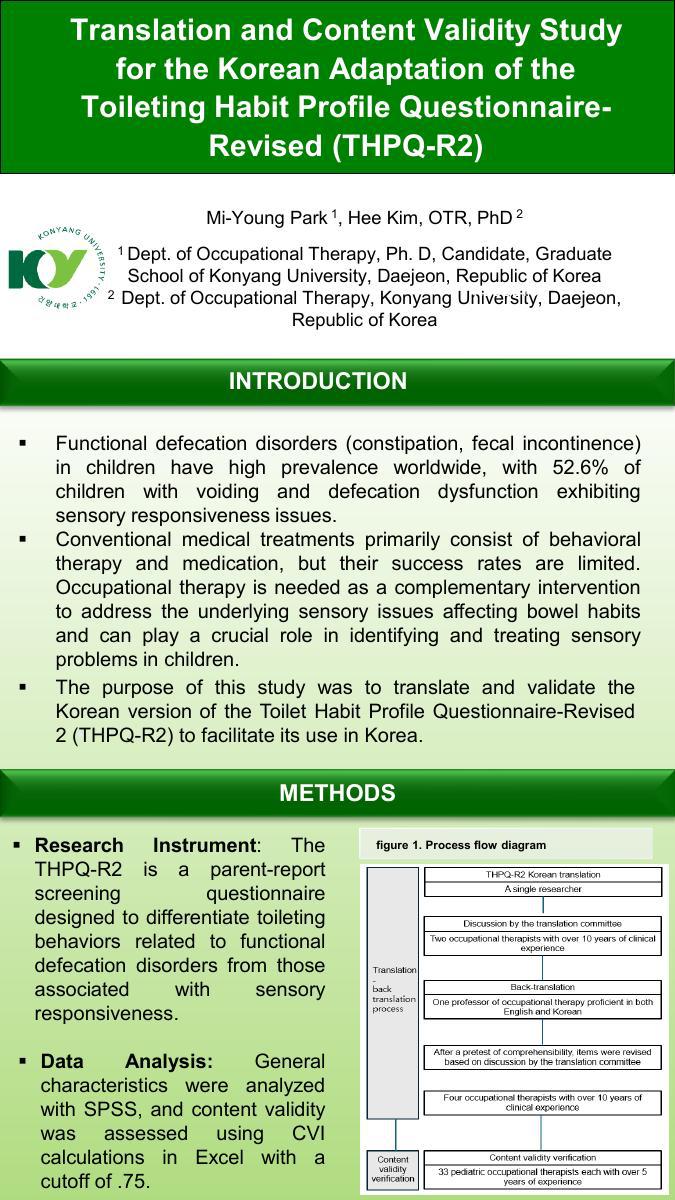
Methods/Approach: To ensure content validity and cultural adaptation, the translation process followed a four-step guideline, including forward translation, reconciliation through consensus, content validity analysis, and back translation. A panel of 33 experts, occupational therapists with over five years of experience in the pediatric field and professors, assessed the content validity index (CVI) of the translated questionnaire.
Results/Practice lmplications: Among the 33 participants, the majority (69.6%) were in their 30s, and 16 participants had over 10 years of experience. All participants worked in hospitals or private therapy clinics. The participants' educational backgrounds included 21 with a bachelor's, 6 with a master's, 3 with a doctoral degree. The Content Validity Index (CVI) for all 25 items of the Korean THPQ-R2 was above 0.81. Overall CVI for all items was 0.87, indicating a high level of content validity.
Conclusion/Contribution to the occupational therapy profession: The Korean THPQ-R2 is a valid tool for assessing toileting habits related to sensory processing in children. It is expected to facilitate the understanding of children's toileting habits and be useful to verify the effect of sensory integration.