
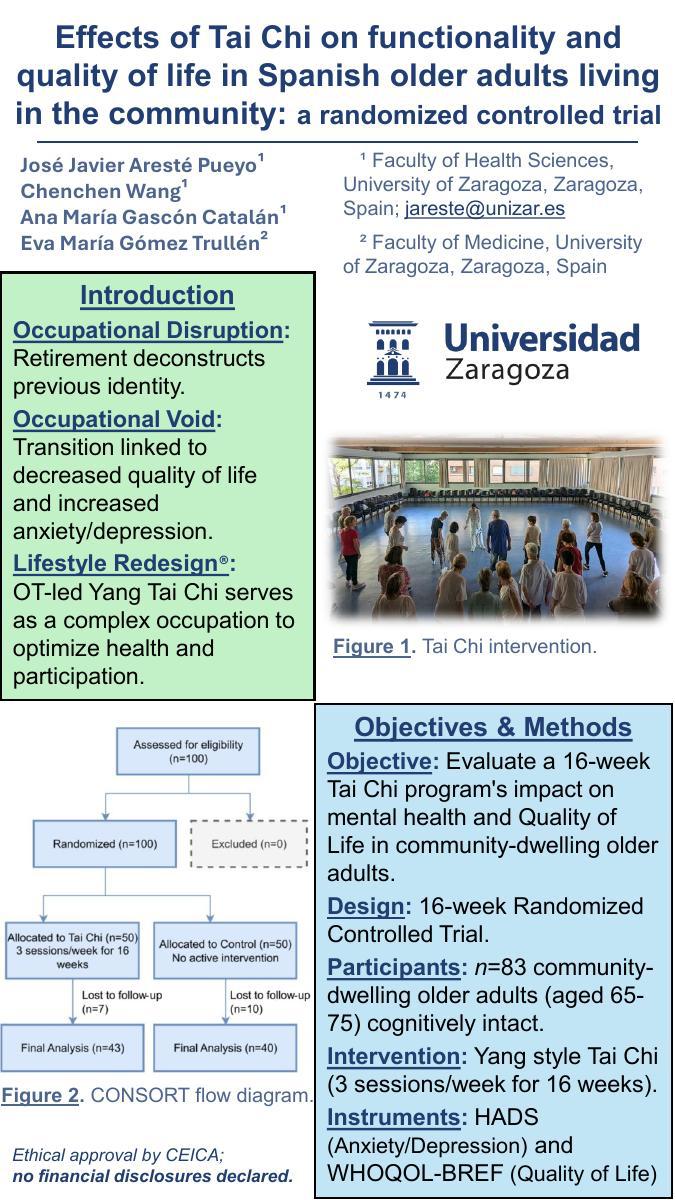
Introduction: The aging population faces significant challenges, particularly in developed countries, including risks like falls, physical decline, and social isolation. Tai Chi, a traditional Chinese practice combining movement, breathing, and concentration, has been shown to improve physical function and emotional well-being in older adults. It offers an accessible way to address these risks, especially for older adults living in the community.
Objectives: This study aims to assess the impact of a 16-week Tai Chi program on the functionality and quality of life of older Spanish adults living in the community (March 2025 – June 2025). Specific objectives include evaluating mobility, balance, muscle strength, respiratory function, knee proprioception, and overall quality of life. Outcomes will be compared between a Tai Chi intervention group and a control group with no intervention.
Methods: This study will employ a pre-post experimental design with a randomized control group involving 100 Spanish participants aged 65 and older. The intervention group will practice Tai Chi three times a week for 16 weeks. Assessments will be conducted at three time points: pre-intervention, intermediate, and post-intervention. Key variables to be measured include balance, mobility, functionality, proprioception, respiratory function, and quality of life.
Practice Implications: It is expected that the Tai Chi group will show significant improvements in balance, mobility, muscle strength, respiratory function, and quality of life. This program may serve as a model for integrating culturally enriching physical activities into healthcare for older adults.
Contribution to the occupational therapy profession: Tai Chi is a promising intervention in occupational therapy, enhancing functionality, reducing fall risk, and promoting healthy aging by fostering both physical and emotional well-being.