
Introduction:
The research is motivated by the established link between handwriting and academic achievement, as well as the recognition that various factors can influence handwriting performance. Previous research has predominantly focused on the impact of fine motor skills and visuomotor integration on handwriting performance. The influence of trunk stability on handwriting performance, however, has been rarely explored.
Objectives:
The objective of this study is to investigate the correlation between core muscle strength, posture control, and handwriting posture, as well as to examine how these factors affect legibility and writing speed.
Methods:
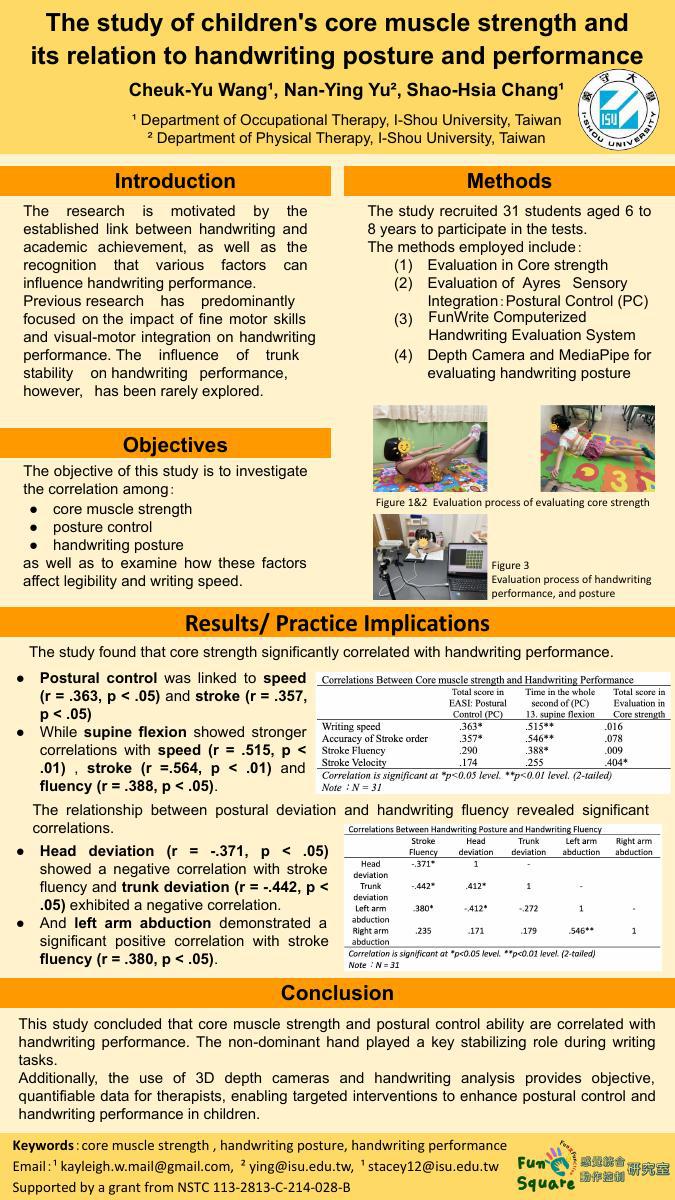
The study recruited 31 students aged 6 to 8 years to participate in the tests. The methods employed include evaluating core strength, conducting assessments of postural control using Ayres Sensory Integration, utilizing computerized handwriting evaluations, and employing depth camera and computer vision (MediaPipe) to evaluate handwriting posture.
Results:
The study found that core strength significantly correlated with handwriting performance. Postural control was linked to speed (r = .363, p < .05) and stroke (r = .357, p < .05), while supine flexion showed stronger correlations with speed (r = .515, p < .01) , stroke (r =.564, p < .01) and fluency (r = .388, p < .05). Head deviation was found to affect fluency (r = -.371, p < .05), and left arm abduction influenced fluency (r = .380, p < .05).
Conclusion:
This study concluded that core muscle strength and postural control ability are correlated with handwriting performance. Additionally, the use of 3D depth cameras and handwriting analysis provides objective, quantifiable data for therapists, enabling targeted interventions to enhance postural control and handwriting performance in children.