
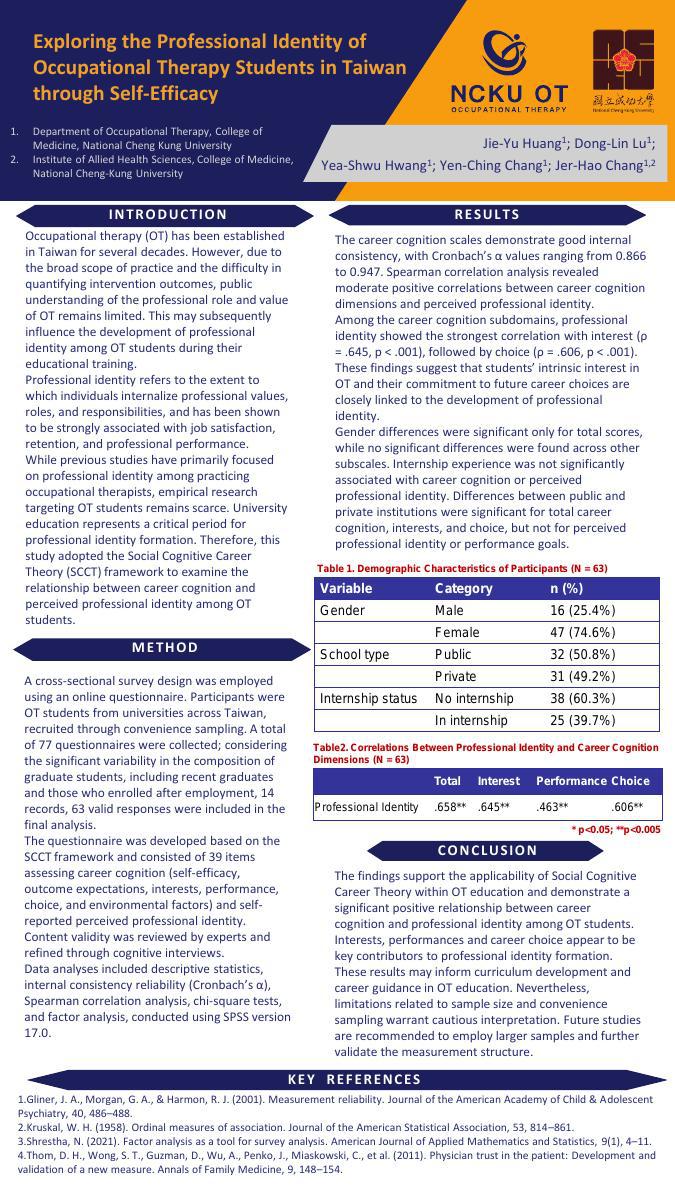
Introduction: Professional identity refers to internalizing professional knowledge and values, creating a sense of belonging. Research has shown that individuals with a strong professional identity are more engaged in their field. Occupational therapists play a vital role in healthcare teams; however, public awareness of the field remains limited, requiring a stronger professional identity. Students' professional identity is closely linked to their understanding, interest, and perceived career potential. University is a critical time for forming professional identity, making it valuable to explore how students perceive their roles and the factors that influence this perception.
Objectives: This study aims to explore the relationship between occupational therapy students' career cognition and professional identity. It also studies how self-efficacy, outcome expectations, goal-setting, interest, and environmental factors affect professional identity, and how gender, grade level, and school influence career cognition.
Methods: This cross-sectional survey collected data from occupational therapy students in Taiwan using online questionnaires based on the SCCT, which included scales on career cognition, self-efficacy, and professional identity. Pearson’s correlation coefficient and the chi-square test were conducted.
Results: The study found a moderate positive correlation between career cognition and professional identity. School resources and environmental factors significantly affected students' career interests and choices.
Conclusion: This study provided a preliminary framework for understanding the relationship between career cognition and professional identity and explored the impact of factors on this relationship. The findings can guide educators in enhancing professional identity and supporting students' career development.