
Introduction / Rationale
Children with developmental delays face oral health problems, disrupting diet and contributing to food insufficiency. Maternal mental health and socioeconomic disparities further exacerbate these challenges.
Objectives
This study examines the relationship between oral health problems and food insufficiency in children with developmental delays, considering child, health, and socioeconomic factors.
Methods / Approach
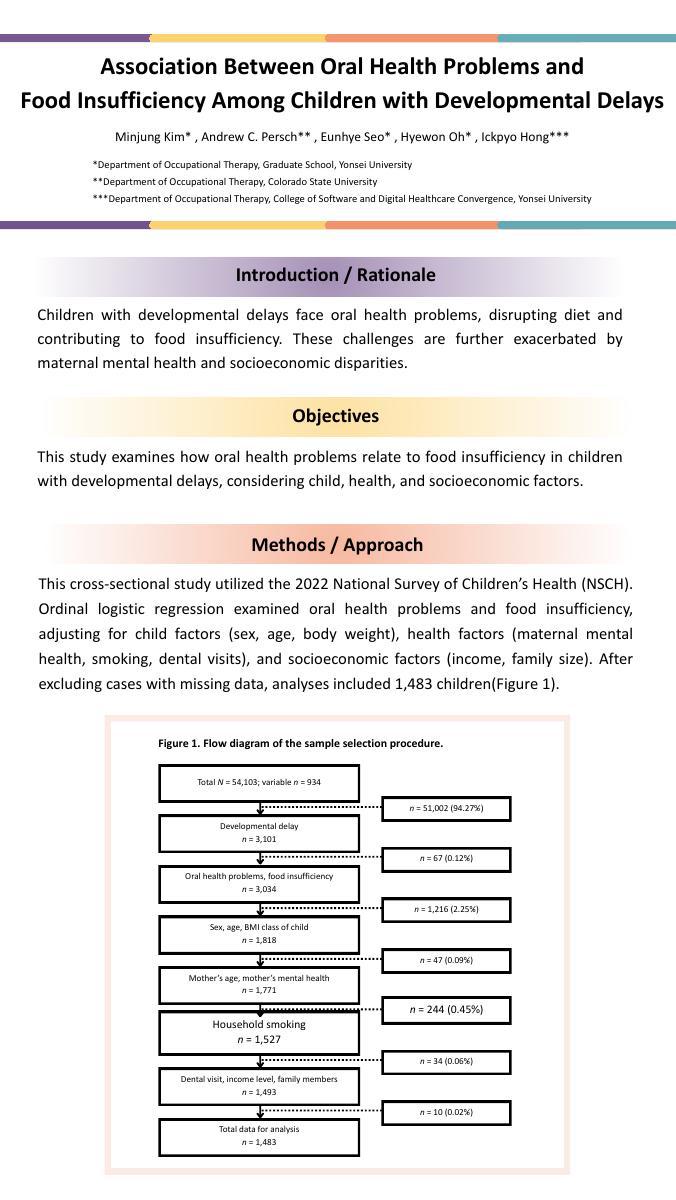
This cross-sectional study used the 2022 National Survey of Children’s Health (NSCH). Ordinal logistic regression analyzed oral health problems and food insufficiency, adjusting for child (sex, age, body weight), health (maternal mental health, smoking, dental visits), and socioeconomic factors (income, family size).
Results / Practice Implications
Among 1,483 children with developmental delays, 26.2% had oral health problems. Model 1, adjusted for child characteristics, found a significant association between oral health problems and food insufficiency (AOR = 2.05, 95% CI 1.38–3.05, p < .01). Model 2, controlling for health-related variables, showed the association remained significant (AOR = 1.73, 95% CI 1.17–2.56, p < .01). Poor maternal mental health increased food insufficiency risk (AOR = 4.04, 95% CI 2.31–7.05, p < .01). Regular dental visits reduced the risk by 44% (OR = 0.44, 95% CI 0.28–0.71, p < .01). Model 3, adjusting for socioeconomic variables, found children from low-income households were 9.82 times more likely to experience food insufficiency (95% CI 5.00–19.36, p < .01).
Conclusion / Significance
Findings highlight the role of oral health, maternal mental health, and socioeconomic disparities in food insufficiency. Occupational therapists can support families through caregiver training and advocacy for expanded dental and nutritional resources.