
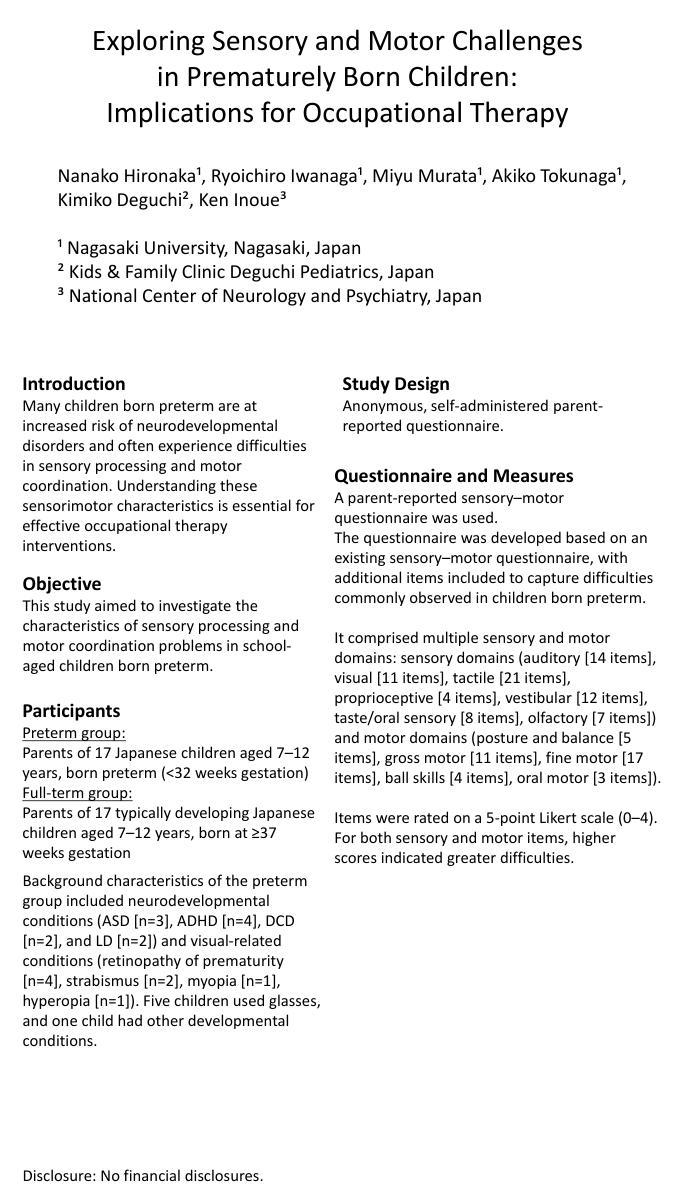
Introduction: It is known that many prematurely born children have neurodevelopmental disorders. These children often exhibit sensory processing and motor coordination problems. It is important to understand the sensorimotor characteristics of preterm children when considering occupational therapy.
Objectives: This study aimed to investigate the characteristics of sensory processing and coordination problems in premature infants.
Methods: Using an anonymous self-administered survey form, the responses of 17 parents of Japanese children aged 7 to 12 years born prematurely (at less than 32 weeks gestation) were compared with those of 17 parents of typically developing Japanese children aged 7 to 12 years born at term (at 37 weeks gestation or later).
Results: When comparing the two groups of premature and full-term infants, significant differences were observed in several items. In terms of sensory aspects, the premature infant group scored significantly higher on five auditory items and one visual item. In terms of motor aspects, the premature infant group scored significantly higher on three items related to posture and balance, eight items related to gross motor skills, 16 items related to fine motor skills, and two items related to oral motor skills.
Conclusion: Premature infants are more likely to exhibit problems in auditory and visual sensory processing and pervasive areas of motor function than full-term infants. When providing occupational therapy to premature infants, sensory and motor problems should be assessed and treated.