
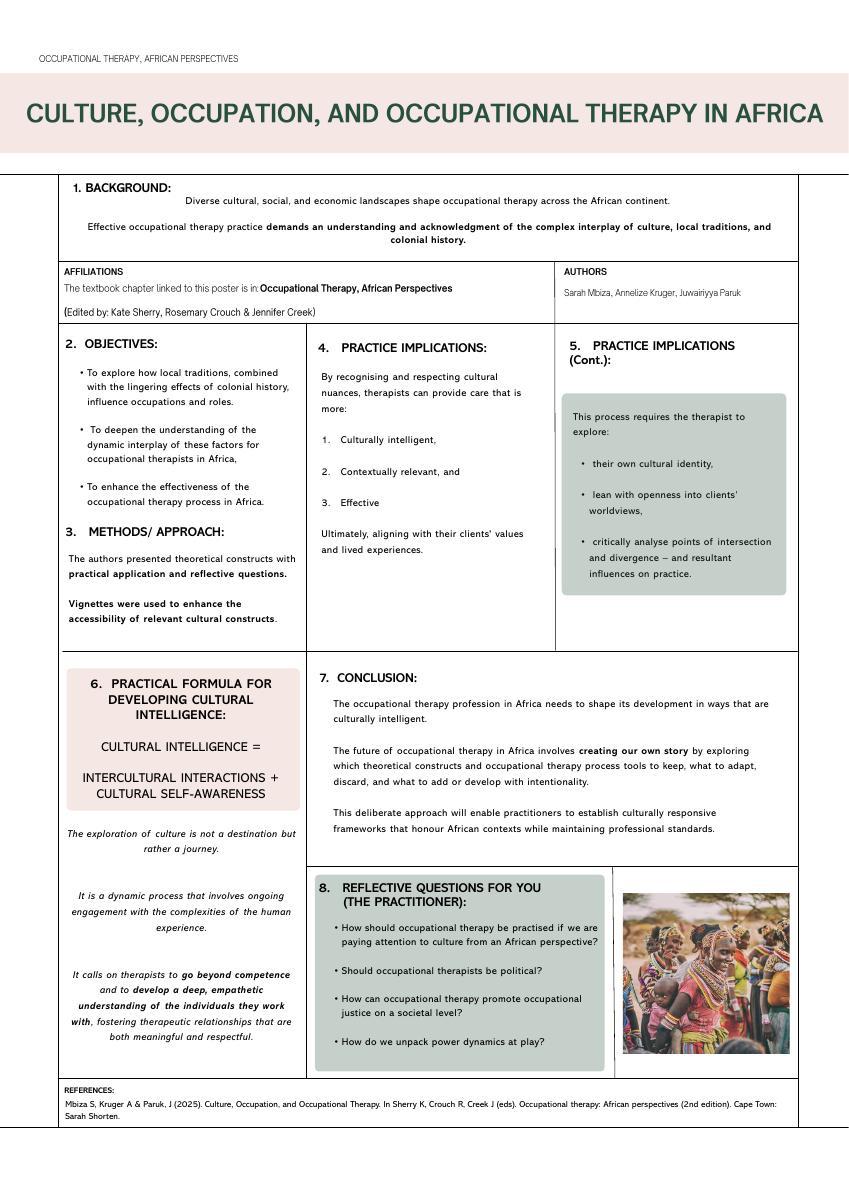
Introduction/Rationale: Diverse cultural, social and economic landscapes shape occupational therapy practice in Africa. Effective occupational therapy practice demands an understanding and acknowledgment of the complex interplay of culture, local traditions and colonial history.
Objectives: This book chapter explores how local traditions, combined with the lingering effects of colonial history, influence occupations and roles- resultantly aiming to deepen occupational therapists' understanding of these dynamics to enhance effective occupational therapy practice in Africa.
Methods/Approach: Aligned with the chapter’s objectives, the approach targeted occupational therapists practicing in the African context. As a result, the authors focused on practical application, rather than just theory. The chapter was organised thematically, with themes reflecting the influence of culture in all facets of the therapeutic encounter. The literature reviewed considered seminal occupational therapy texts, literature on the intersection of occupational therapy and culture, and literature relevant to cultural practices in Africa.
Results/Practice Implications: By recognising and respecting cultural nuances, therapists can provide more culturally intelligent, and effective care, aligning with their clients' values and lived-experiences. This process requires the therapist to explore their own cultural identity, openly explore their clients’ worldviews and critically analyse points of intersection and divergence – and resultant influences on practice.
Conclusion: In “exploring the way forward”, the occupational therapy profession in Africa needs to shape its development in ways that are culturally intelligent- by exploring which theoretical constructs and process tools to keep, adapt, discard, and what to add or develop with intentionality. This approach will enable practitioners to establish culturally responsive frameworks that honour African contexts while maintaining professional standards.