
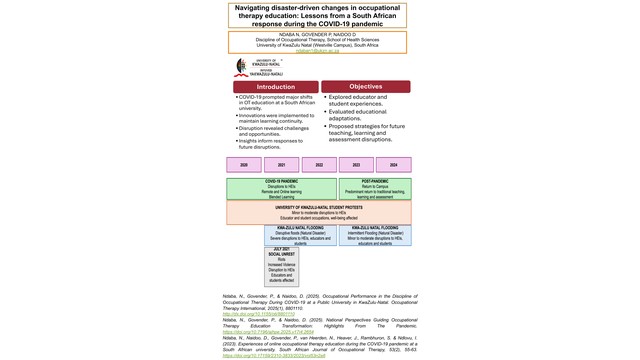
Introduction/Rationale: The COVID-19 pandemic forced a significant shift in occupational therapy education at a South African higher education institution, driving innovative adaptations to maintain educational continuity and meet evolving learning needs. This period of disruption highlighted both challenges and opportunities, offering insights for ongoing and future disruptions.
Objectives: This study explored the experiences of educators and students, evaluated the educational adaptations and proposed strategies to enhance preparedness for future disruptions in teaching, learning, and assessment.
Methods/Approach: A qualitative case study was conducted at a South African public institution, with purposively selected participants, including heads of departments of occupational therapy education around South Africa or their proxies, representatives from the professional board and professional association (n=9), along with institution management, academic educators, clinical supervisors, academic support educators, and occupational therapy students (n=45), Data were collected through semi-structured interviews on virtual platforms and analysed using NVivo. Content analysis themes were generated while ensuring trustworthiness and ethical standards.
Results/Practice implications: Two frameworks were developed: the Framework for Supporting Occupational Performance in Educators and Students, advocating a flexible, student-centred approach to online learning, and the Framework for Occupational Therapy Education Disaster Responses, offering a tailored approach to disaster preparedness based on South Africa’s unique socioeconomic, political, and healthcare context.
Conclusion: The post-pandemic era presents an opportunity to transform South African occupational therapy education through sustainable, blended learning models that foster flexibility, accessibility, and student autonomy.
Significance: Strengthening disaster preparedness and promoting equitable educational practices will ensure that core competencies and professional standards are maintained in diverse learning environments.