
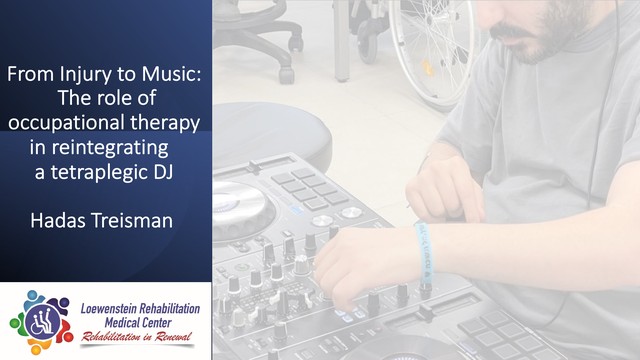
Introduction: A 34-year-old male, injured by a gunshot to the neck, sustained a C5 ASIA C spinal cord injury, resulting in significant weakness in all four limbs and limited manual dexterity. This severely impacted his ability to perform basic and instrumental Activities of Daily Living (ADL and IADL), particularly due to the restricted movement of his upper extremities. During inpatient rehabilitation, he expressed a strong desire to return to his work as a DJ and music producer, which requires highly refined manual dexterity.
Objective: To describe the rehabilitation process involved in promoting a tetraplegic individual with limited dexterity return to work as a DJ and music producer.
Approach: The rehabilitation plan included biomechanical components such as maintaining range of motion, motor strengthening, and promoting fine motor skills. Throughout his rehabilitation emphasis was placed on multidisciplinary collaboration. In addition, we analyzed the specific demands of using a DJ controller and collaborated with mechanical engineers and industrial designers to create customized aids for the client. These aids, designed for use on both the controller and fingers, were adjusted as needed during therapy sessions to improve functionality and efficiency.
Results: After discharge from inpatient rehabilitation, the client returned to partial employment, focusing on music production, and gradually reintegrated into his professional life.
Contribution to the occupational therapy profession: This case demonstrates how occupational therapy can support individuals in achieving meaningful participation in their careers, even after severe injuries, by focusing on adaptive strategies and assistive technology.