
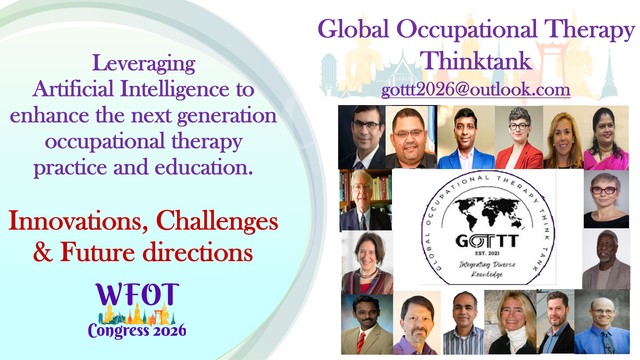
Introduction/Rationale: Artificial intelligence (AI) has the potential to enhance client’s outcomes by optimizing therapeutic interventions and providing personalized treatment plans. The widespread use of AI by therapists seems inevitable, offering potential benefits while also carrying the risk of negative outcomes.
Objectives: To sensitize the global community of occupational therapists regarding responsible adoption of AI.
Methods/Approach: Literature review and sentiment analysis among an international group of occupational therapists/scholars informed the content of this presentation.
Results/Practice implications:
Existing research highlights AI’s role in enhancing clinical support by providing:
a. evidence-based recommendations including adaptive equipment guidance, b. condition-specific advice by providing personalized and tailored suggestions for home exercise program and/or daily living strategies,
c. support telehealth and digital therapy by guided therapy sessions, patient & caregiver training, and progress tracking and adjustments, and
d. optimized education and training for case-study analysis and simulated patient interactions.
Following a sentiment analysis of multiple deliberations of a group of international occupational therapists and scholars, it appeared that despite the excitement of integration of AI in OT education and practice, a cautionary theme emerged that centered around the ethical use of AI and disability biases in AI language learning models.
Conclusion/Contribution to the occupational therapy profession: AI is a powerful tool to incorporate in OT practice and education, however, there is a need to bridge the gaps in evidence to address ethical challenges in adopting AI in Occupational Therapyresponsively.