
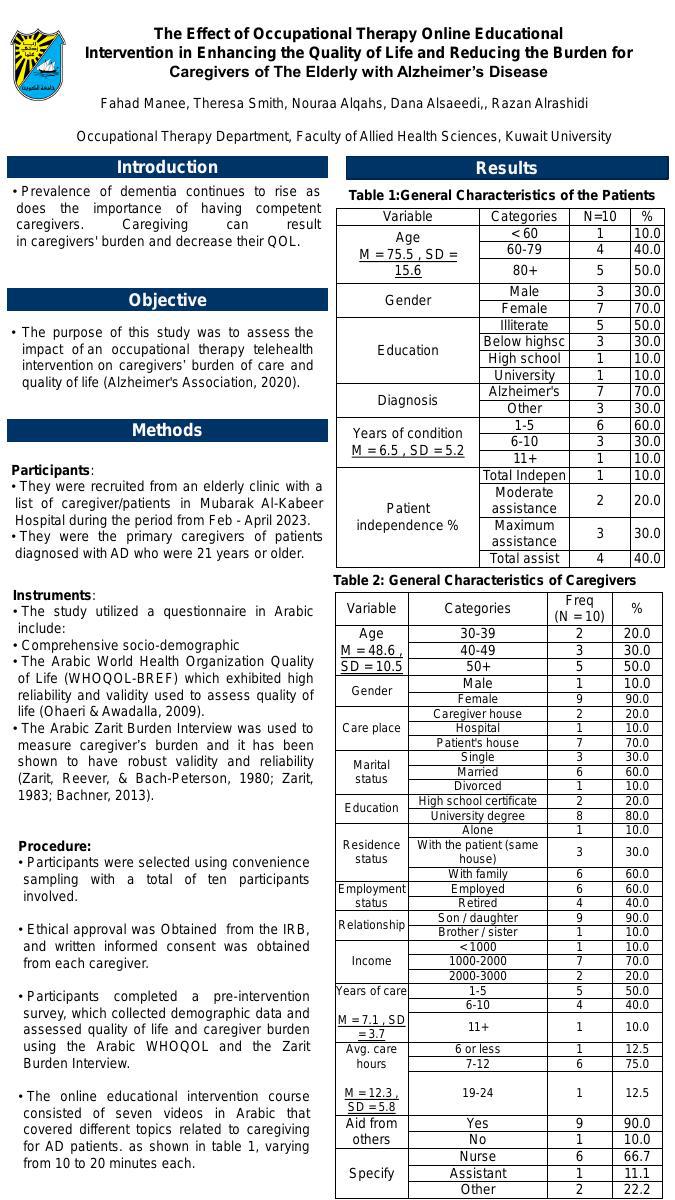
Background and Objective: As the prevalence of dementia continues to rise, the role of caregivers becomes paramount in providing comprehensive care and support. This care and support can contribute to the development of caregivers' burden and a decrease in their quality of life. The purpose of this study was to assess the impact of an occupational therapy telehealth intervention on caregivers’ burden of care and quality of life.
Research Design and Methods: The study used a quasi-experimental design. Descriptive statistics were used to summarize the participants’ characteristics and paired sample t-tests to examine the difference in instrument scores between the pre and post-periods. Data were collected pre- and post the intervention with a short version of the Arabic version of the Zarit Burden Interview (ZBI-12) and the Arabic World Health Organization Quality of Life assessment (WHOQOL-BREF).
Results: Ten caregivers of the elderly with dementia participated. The ZBI-12 score decreased significantly from pretest (M=61.04, SD = 18.53) to posttest (M=53.13, SD = 19.72), P=0.012. The Arabic WHOQOL-BREF score increased significantly from prior to intervention (M=56.67, SD = 21.38), to post intervention (M=64.06, SD = 20.41), P= 0.029.
Conclusion An occupational therapy telehealth intervention can decrease burden of care and improve quality of life for caregivers of persons with dementia.