
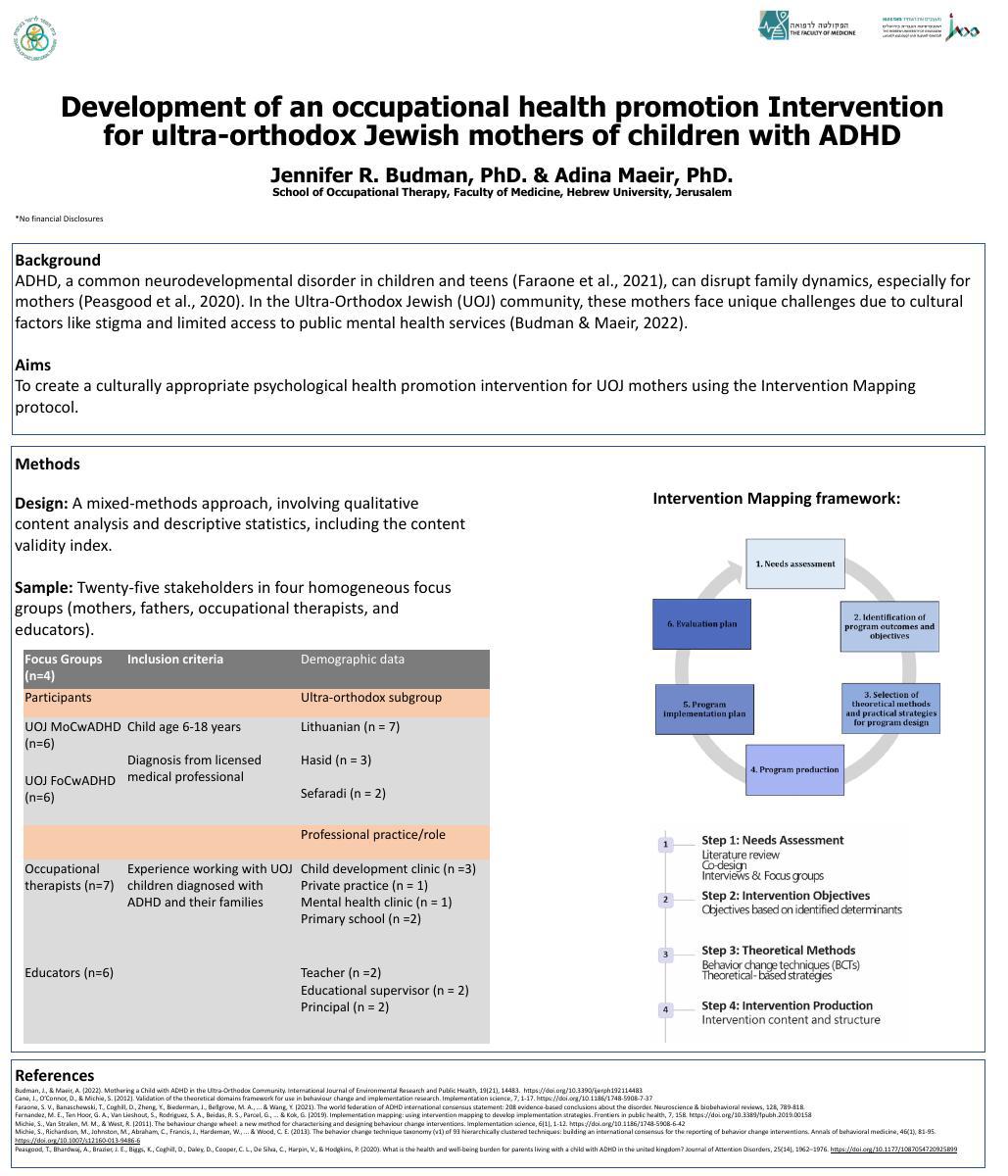
Introduction / Rationale: ADHD, a common neurodevelopmental disorder, can disrupt family dynamics, particularly affecting mothers. In the Ultra-Orthodox Jewish (UOJ) community, mothers face additional challenges due to stigma and limited access to mental health services.
Top of Form
Bottom of Form
Objectives: To develop a culturally sensitive occupational health promotion intervention for UOJ mothers of children with ADHD using the Intervention Mapping protocol.
Methods: A mixed-methods approach was employed, including data collection from four focus groups with stakeholders (n=25). Data were analyzed through qualitative content analysis and descriptive statistics, with the intervention’s relevance, effectiveness, and cultural fit evaluated using the content validity index (CVI). The protocol incorporated behavior change theories, including the COM-B system and the Theoretical Domains Framework, alongside occupational therapy and ADHD literature tailored for the UOJ context.
Results / Practice Implications: Key behavior change determinants included reducing ADHD stigma, increasing knowledge, raising awareness of school resources, strengthening advocacy skills, and supporting maternal self-care. Strategies involved group sessions, health education, social support, re-attribution techniques, active learning, goal setting, and identity-building. Participants validated the intervention’s cultural fit, with CVI scores averaging .86, .85, and .87.
Conclusion / Contribution to the Occupational Therapy Profession: This study highlights the value of culturally tailored interventions that address stigma and promote behavior change, offering a framework for similar populations. Further research is required to assess the feasibility and long-term impact, advancing occupational therapy’s role in designing inclusive and culturally responsive programs.