
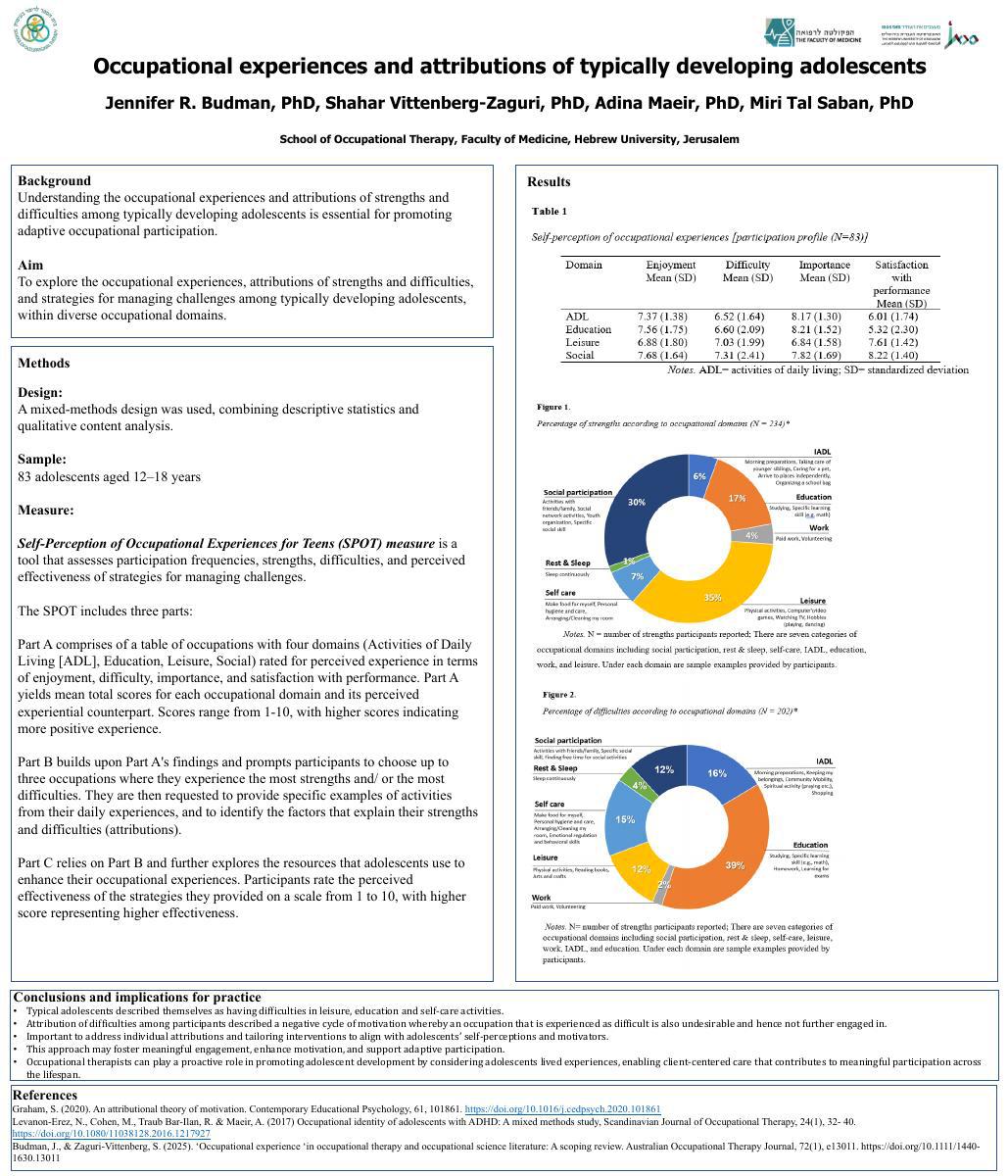
Introduction: Understanding the occupational experiences and attributions of strengths and difficulties among typically developing adolescents is essential for promoting adaptive occupational participation.
Objectives: To explore the occupational experiences, attributions of strengths and difficulties, and strategies for managing challenges among typically developing adolescents, within diverse occupational domains.
Methods: A mixed-methods design was used, combining descriptive statistics and qualitative content analysis. Data were collected from 83 adolescents aged 12–18 years using the Self-Perception of Occupational Experiences for Teens (SPOT) measure. This tool assessed participation frequencies, strengths, difficulties, and perceived effectiveness of strategies for managing challenges. Quantitative data analyzed participation frequencies, while qualitative analysis identified themes related to attributions and strategies.
Results: Results showed high enjoyment in social activities and low difficulty in activities of daily living. Strengths were commonly reported in leisure and social domains, while education presented the greatest challenges. Themes included internal attributes, external influences, and motivation as key factors impacting strengths and difficulties. Strategies such as connecting with others and aligning activities with personal values were identified as most effective.
Conclusion: This study underscores the importance of addressing individual attributions and tailoring interventions to align with adolescents’ self-perceptions and motivators. This approach may foster meaningful engagement, enhance motivation, and support adaptive participation. Occupational therapists can play a proactive role in promoting adolescent development by considering adolescents’ lived experiences, and enabling client-centered care that contributes to meaningful participation across the lifespan.