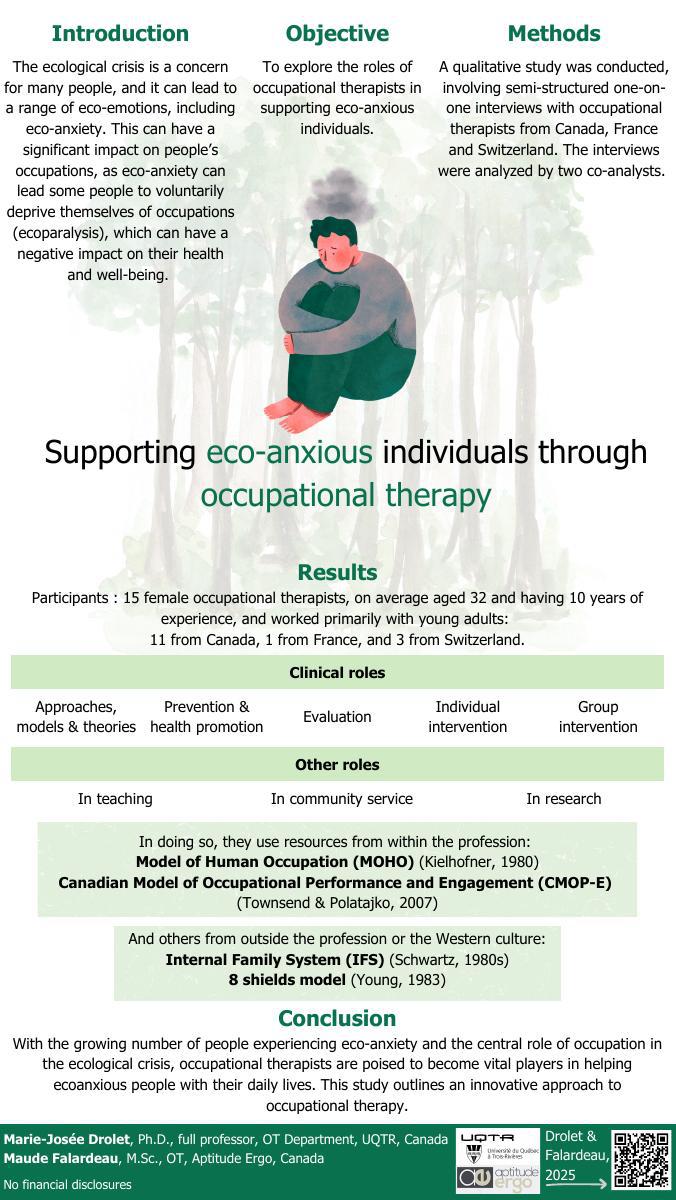
Introduction: The ecological crisis is a source of concern for a growing number of people, especially young people. It induces various earth emotions, including ecoanxiety, which can have significant occupational consequences, affecting work, leisure, daily living activities and social relations. Given that human occupations are responsible for the ecological crisis, ecoanxiety can lead some people to self-impose occupational deprivation, even leading to ecoparalysis, which can significantly affect their health and well-being.
Objectives: The aim of this study was to explore the roles of occupational therapists in supporting ecoanxious people.
Methods: A qualitative research was conducted. Semi-structured individual interviews were conducted with French-speaking occupational therapists from three countries. The verbatims of the interviews were transcribed and interpreted by two co-analysts.
Results: Fourteen female occupational therapists from Canada, France and Switzerland took part in the study. All argue that occupational therapists can support ecoanxious people. To do this, their roles need to be actualized in different contexts, including: 1) prevention and promotion activities; 2) initial or ongoing assessment; 3) individual or group interventions; 4) teaching activities; 5) research activities; and 6) community involvement. In doing so, they use a variety of models, approaches, and tools both internal and external to the field of occupational therapy.
Conclusion: Considering that ecoanxious people are likely to be increasingly numerous, and that occupations are at the heart of the ecological crisis, occupational therapists emerge as a key player in supporting these people in their daily lives. This study outlines an innovative practice in occupational therapy.
