
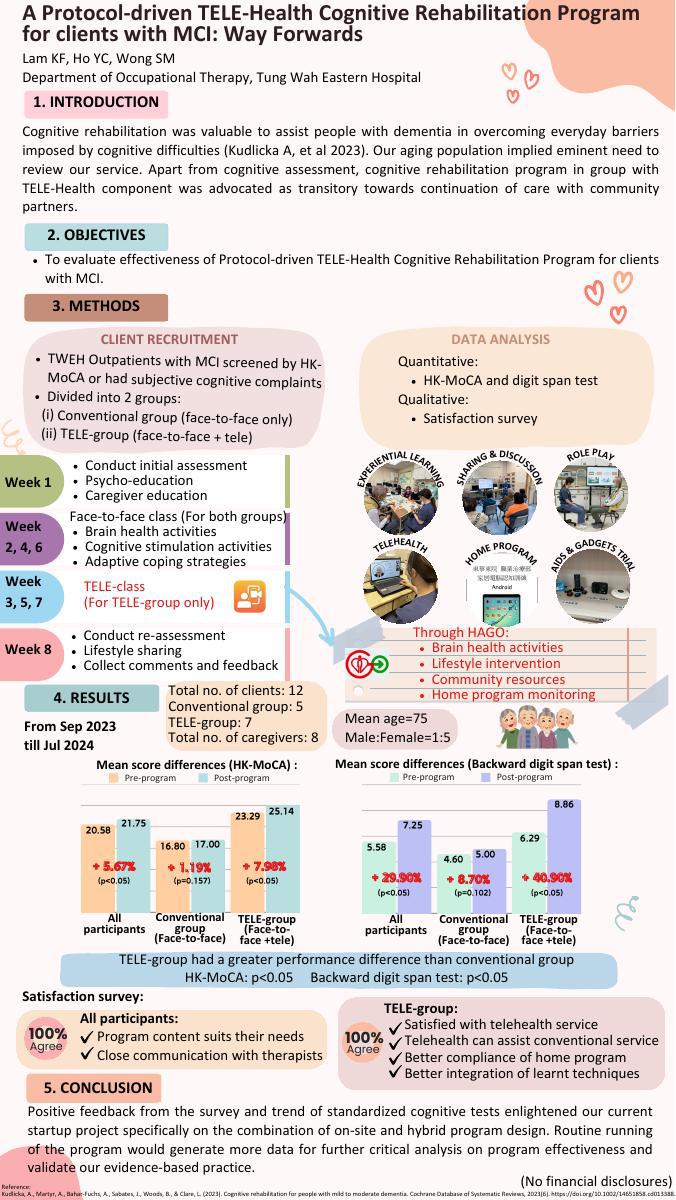
Introduction / Rationale: Cognitive rehabilitation was valuable to assist people with dementia in overcoming everyday barriers imposed by cognitive difficulties. Our aging population implied eminent need to review our service. Cognitive rehabilitation program in group with TELE-health component was advocated as transitory towards continuation of care with community partners.
Objectives: To evaluate the effectiveness of Protocol-driven TELE-Health Cognitive Rehabilitation Program for clients with MCI Methods :The program consisted of face-to-face sessions for conventional group and additional TELE sessions for TELE-group. Outpatients with MCI screened by HK-MoCA were recruited and allocated into the two groups. Program contents covered cognitive stimulation and adaptive coping strategies implemented through experiential learning, sharing and discussion, role play, aids and gadgets trial and home program. Outcome measures included patient-caregiver satisfaction survey, pre- and post-HK-MoCA and digit span test.
Results: 12 outpatients (mean age= 75) were recruited during September 2023 till July 2024. Mean score of HK-MoCA and backward digit span test were 20.58 and 5.58 at entry. Results indicated an overall increase in mean score of two cognitive tests by 5.67% (p<0.05) and 29.9% (p<0.05) (n=12). Subgroup analysis reviewed that TELE-group (n=7) performed significantly better (p<0.05), which increased by 7.94% (p<0.05) and 40.9% (p<0.05) respectively. Results of satisfaction survey reflected their needs have been addressed and the program were delivered effectively. On top of saving their traveling time, hybrid mode could enhance compliance of home programs and integration of learnt techniques within real-life situations.
Conclusion: Positive feedback from the survey and trend of standardized cognitive tests enlightened our startup project specifically on the hybrid program design. Routine running of the program would generate more data for further critical analysis on on program effectiveness.