
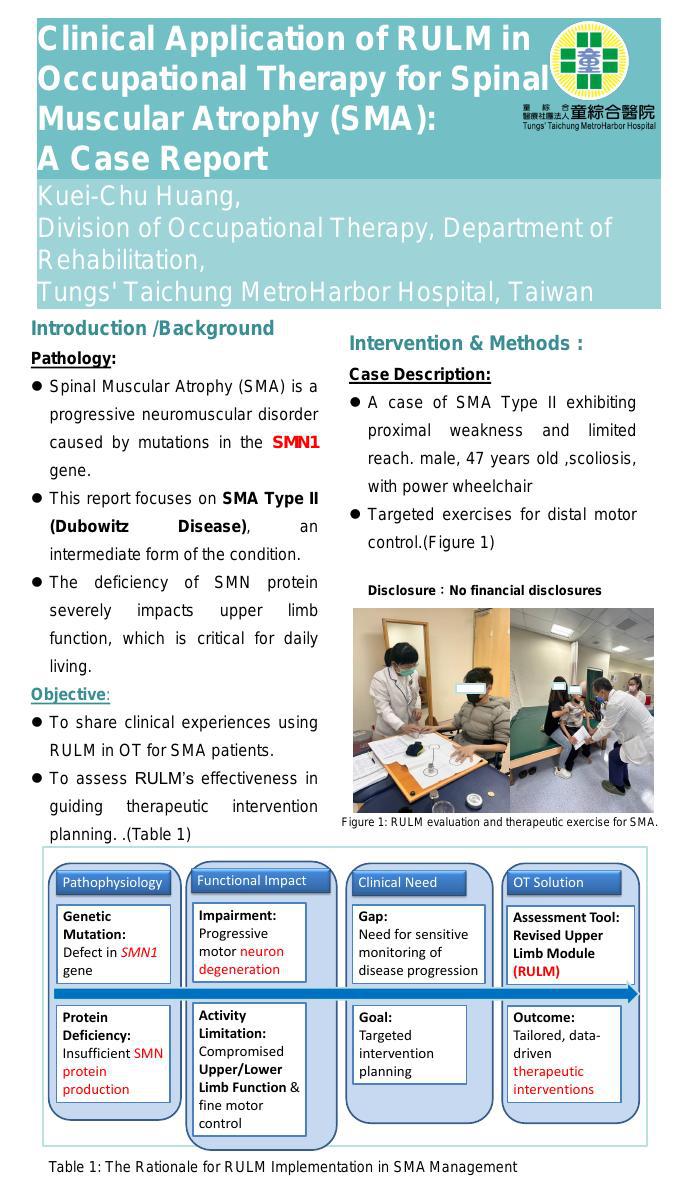
Introduction/Rationale: Spinal Muscular Atrophy (SMA) is a progressive neuromuscular disorder caused by mutations in the SMN1 gene, leading to motor neuron degeneration. This gene produces the survival motor neuron (SMN) protein, crucial for motor neuron health. With a prevalence of 1 in 6,000 to 1 in 10,000 live births, SMA is a significant genetic cause of infant mortality. The deficiency of SMN protein severely affects upper limb function, underscoring the need for effective assessment tools in occupational therapy. The Revised Upper Limb Module (RULM) provides a standardized method for evaluating upper limb function, facilitating tailored interventions.
Objectives: This report aims to share clinical experiences with RULM in occupational therapy for SMA patients and assess its effectiveness in guiding therapeutic interventions.
Methods / Approach: A retrospective review of SMA patients receiving occupational therapy was conducted. RULM assessments were performed at baseline and during therapy, collecting data on upper limb function scores and treatment strategies.
Results/Practice Implications: Results indicate that RULM is a reliable tool for assessing upper limb function in SMA patients. Significant improvements in RULM scores were observed after targeted interventions, suggesting that RULM effectively guides treatment planning.
Conclusion/Contribution to the Occupational Therapy Profession: Integrating RULM into occupational therapy enhances the evaluation and tracking of upper limb function, improving patient outcomes and advancing the profession's ability to address SMA challenges.