Introduction: Delirium is an acute disturbance in attention and awareness, along with other disorders in cognition. The reduction in delirium monitoring, pre-prevention, and patient care due to organizational issues, lack of personnel, increased use of benzodiazepines, and restricted family visitation needs alternative intervention through the lens of a client-centered and holistic approach.
Objectives: Patients suffer from delirium, often detected in acute illness and related to severe cognitive dysfunction. Evaluation and intervention necessitate a limited period and determination. Occupational therapists are vital in addressing the condition to facilitate engagement in occupation.
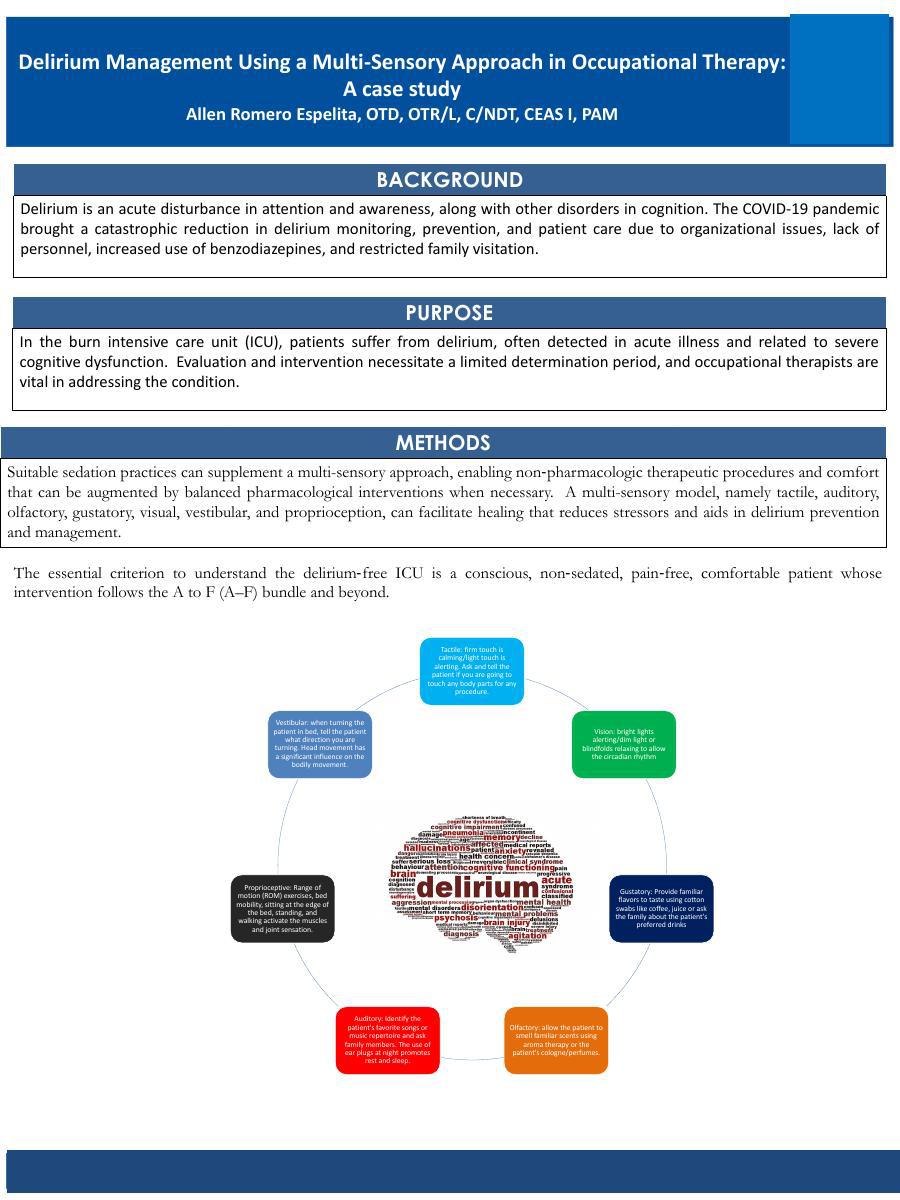
Methods: Suitable sedation practices can supplement using a multi-sensory approach, enabling non‐pharmacologic therapeutic procedures and comfort that can be augmented by balanced pharmacological interventions when necessary. A multi-sensory model, namely tactile, auditory, olfactory, gustatory, visual, vestibular, and proprioception, can facilitate healing that reduces stressors and aids in delirium prevention and management.
Results: The Multi-sensory approach, using case studies, provides a better understanding of how patients transition using the Richmond Agitation Sedation Scale (RASS). The patient was evaluated from -5 (no response to voice or physical stimulation) to +2 (frequent non-purposeful movement, not aggressive or vigorous) to 0 (spontaneously paying attention to caregiver) and facilitated meaningful and client-centered engagement in occupation.
Conclusion: The multi-sensory approach in the context of delirium identification and management correlates with improved results, incorporating more delirium-free days, which could be deemed a dose-response relation effective in delirium prevention, reducing the delirium burden and cost-effectiveness.
